




What happens when the bravest hero in the universe simply breaks? That question sits at the heart of one of the most ambitious storylines in comic book history. The hal jordan parallax transformation is not just a villain arc — it is a decade-long narrative about grief, corruption, redemption, and the price of absolute power. I want to walk you through the entire journey, issue by issue, so you can understand exactly how DC Comics turned its most trusted hero into its most devastating threat.
- The Destruction That Started Everything
- Emerald Twilight — Green Lantern Vol. 3, Issues #48–50 (1994)
- The Fall of Oa and the Birth of Kyle Rayner
- Zero Hour — DC’s Universe in Freefall (1994)
- Final Night — Redemption Arrives (1996)
- Comparative Timeline: Key Hal Jordan Parallax Events
- Day of Judgment — Becoming the Spirit of Vengeance (1999)
- Green Lantern Rebirth — The Truth About Parallax (2004)
- Comparing the Two Identities: Hal Jordan vs. Parallax
- What the Hal Jordan Parallax Arc Means for Comics
- Frequently Asked Questions
The Destruction That Started Everything
In summary, Hal Jordan’s fall begins not with a choice, but with a loss.
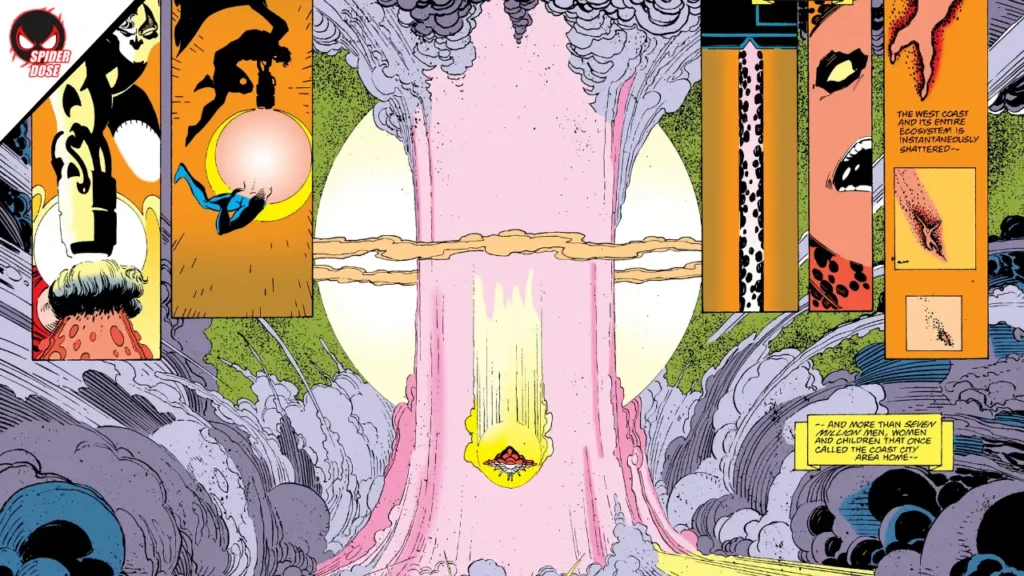
During the events surrounding The Reign of the Supermen (1992–1993), the Cyborg Superman allied with the warlord Mongul. Together, they used technology derived from the planet-ship Warworld to obliterate Coast City, California — Hal’s hometown. Millions of people died. The city simply ceased to exist.
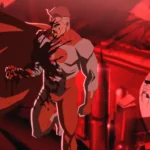
This event appears primarily in Superman: The Man of Steel #25 and the final issues of Green Lantern Vol. 3 leading into 1994. Hal was off-world when it happened. He returns to find rubble where his entire identity once stood.
Furthermore, this loss is not merely physical. Coast City represents his childhood, his friendships, and the life he built before becoming a hero. When writers talk about what made the hal jordan parallax transformation feel earned, they always point here first.
Why Coast City Mattered So Much
What is Coast City in DC Comics? Coast City is Hal Jordan’s California hometown, home to millions, and the emotional anchor of his entire heroic identity — its destruction in 1993 became the emotional trigger for one of comics’ most dramatic character transformations.
The grief that follows is total and unprocessed. Hal receives no real support. The Guardians of the Universe offer punishment instead of compassion. That combination, however, creates the perfect conditions for a catastrophic collapse.
Emerald Twilight — Green Lantern Vol. 3, Issues #48–50 (1994)
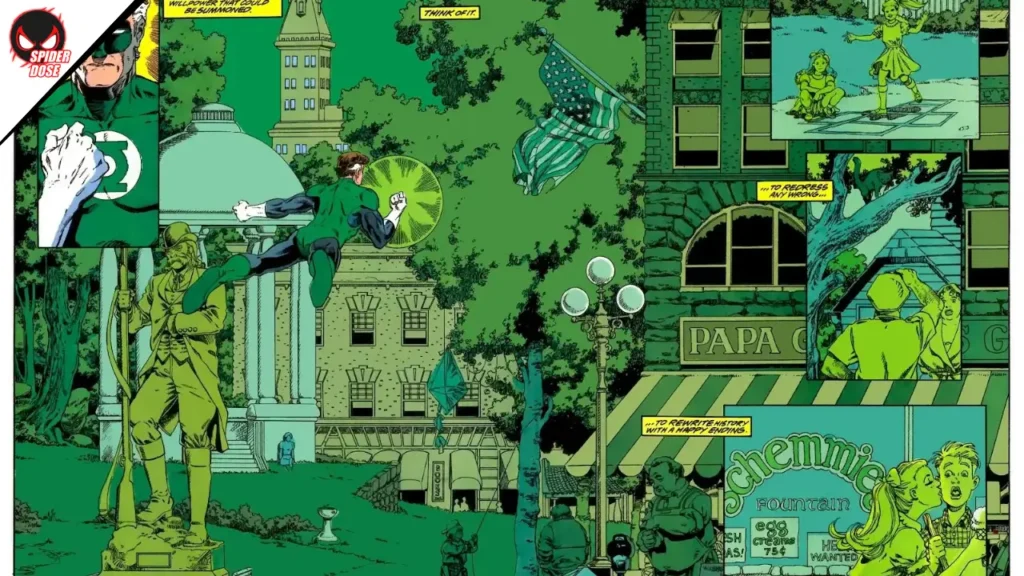
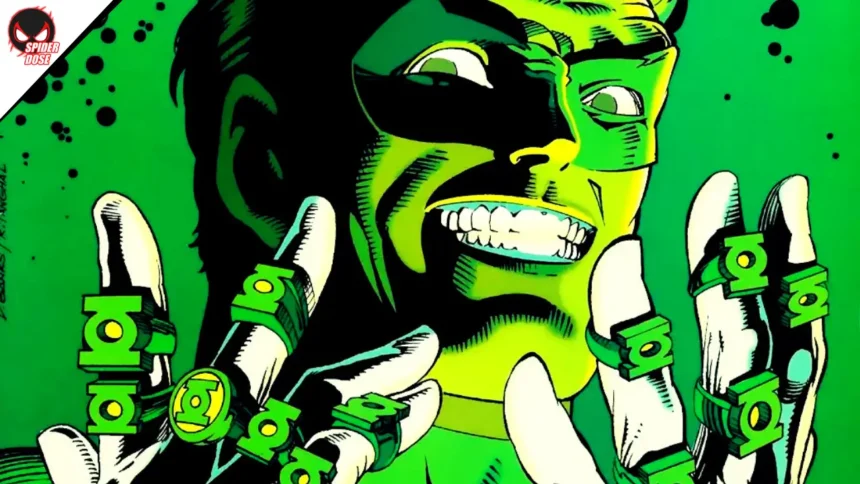
The direct story of how the hal jordan parallax persona came to be is told in Emerald Twilight, written by Ron Marz and published across three issues in 1994.
It begins at Ground Zero. Hal, standing alone in the ruins of Coast City, uses his ring to construct an image of his late father, Martin Jordan — a test pilot killed years earlier in a crash. The constructed Martin questions whether Hal ever truly made him proud. Hal defends himself bitterly. When the construct fades, it’s clear this isn’t just grief. It’s a wound that never healed.
The Moment He Crosses the Line
His mother’s construct appears next. She counsels acceptance — memories are enough, she argues. Hal rejects this completely. He wants Coast City back. Therefore, he does something no Green Lantern should do: he reconstructs the entire city using his ring, including the streets, the buildings, and the people — including his former love, Carol Ferris.
For a brief moment, he has it all again. Then the ring begins to fail as its energy runs out. The city dissolves in front of him a second time.
The Guardians intervene immediately. They declare that using the ring for personal satisfaction violates the Corps’ sacred oath. Hal attacks a Guardian projection, absorbs its residual energy, and sets a course for Oa — determined to demand the total power needed to rebuild Coast City for real.
The Path Through His Own Friends
Knowing his route, the Guardians deploy as many Green Lanterns as possible to stop him. What follows is an emotional gauntlet. Each Lantern Hal defeats is someone he knows — someone he trained, recruited, or called a friend. He strips their rings one by one, growing more powerful with each confrontation.
Among those sent to stop him on Oa is Kilowog, the veteran trainer responsible for preparing nearly every new Green Lantern. Kilowog tries to reason with him, but Hal’s grief-fueled determination is overwhelming. In a shocking act of violence, Hal kills his old friend Kilowog, incinerating his body with ring energy.
Desperate, the Guardians release Sinestro, Hal’s greatest enemy, who had been imprisoned inside the Central Power Battery for years. Their fight is brutal and desperate. Hal overcomes Sinestro in hand-to-hand combat and, in a horrifying turn, snaps Sinestro’s neck — killing him on the spot in front of the Guardians.
That murder marks the definitive point of no return in the hal jordan parallax saga, opening the door for Hal to enter the Central Power Battery, absorb its energy, and emerge transformed.
The Fall of Oa and the Birth of Kyle Rayner
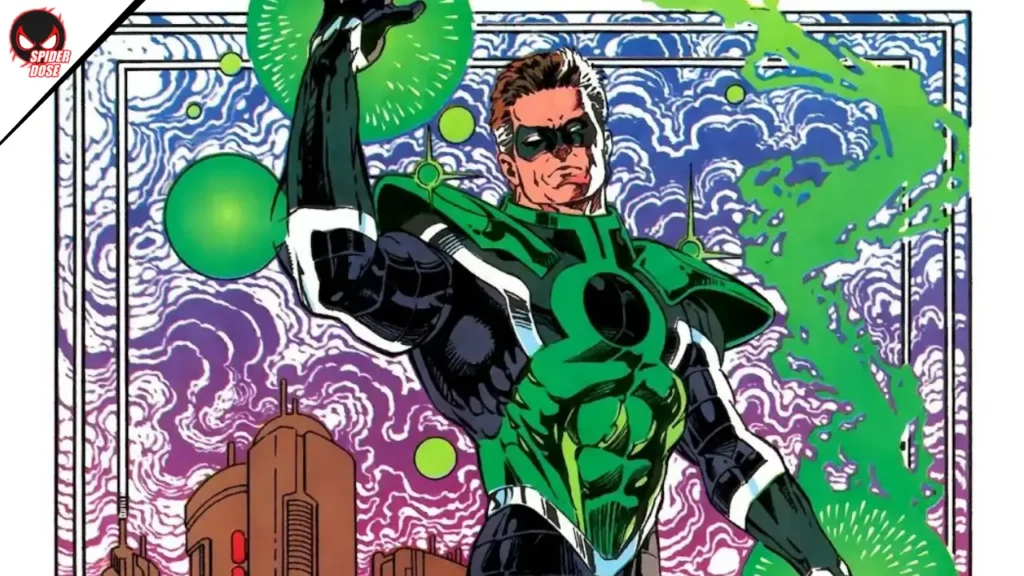
In short, by the end of Emerald Twilight, Hal Jordan had destroyed the Green Lantern Corps almost entirely.
After killing Kilowog on Oa, Hal is confronted by his own horrifying actions. Driven by desperation to fix everything, Hal plunges directly into the Central Power Battery and drains its entire stored energy into himself. Nearly every Guardian present dies during this catastrophic energy siphon. One survivor, Ganthet, manages to escape to Earth.
Ganthet uses the remaining collective life-force of the fallen Guardians to forge a single new power ring. He lands on Earth and hands it to Kyle Rayner, a freelance artist with no prior connection to the Green Lantern mythology, making him the sole torchbearer of the universe.
Kyle Rayner and the Weight of the Last Ring
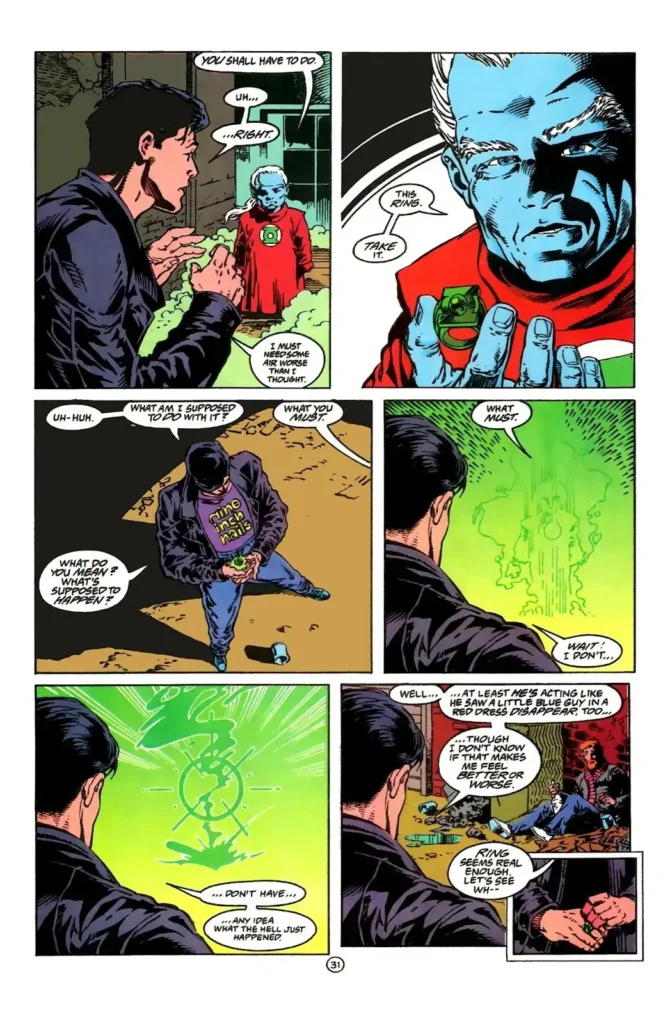
As a result, the Green Lantern series from issue #51 onward follows Kyle as the universe’s last Lantern. His background as an artist gives him a natural gift for intricate energy constructs. However, the tragedy of the mantle arrives swiftly — his girlfriend Alexandra DeWitt is murdered by the villain Major Force, creating a culturally significant moment that coined the “women in refrigerators” trope in comic book history.
Later on, Alan Scott, the Golden Age Green Lantern, helps mentor Kyle and warns him that Hal Jordan has not truly perished, but rather evolved into a cosmic threat named Parallax.
Zero Hour — DC’s Universe in Freefall (1994)
What is Zero Hour? Zero Hour: Crisis in Time is a 1994 DC Comics crossover event written by Dan Jurgens, in which Parallax attempts to erase and recreate the entire timeline — revealing Hal Jordan as the mastermind behind a reality-collapsing catastrophe.
The miniseries begins with temporal chaos caused by Extant (Hank Hall, formerly Hawk), who manipulates time, ages members of the Justice Society, and accelerates entropy. However, Extant is merely a pawn; the true architect of the crisis is Hal Jordan, now fully operating as Parallax.
The Logic Behind the Madness
When Superman notices the timeline being unraveled simultaneously from the past and the future, he assembles Earth’s remaining heroes — including Green Arrow (Oliver Queen), Hal’s closest friend — to make a final stand.
When hal jordan parallax confronts the heroes at time’s zero point, his motivation stems from a tragic logic: to fix a flawed reality, one must destroy it and rebuild it from scratch — a universe where tragedies like Coast City never happen. By absorbing entropy from the end of time, Hal gains the power to compress time into a loop to rupture it.
He even offers personalized universes to his former allies, including an intact Krypton for Superman.
During the battle at the end of time, The Spectre intervenes to stop Hal’s manipulation of creation. As the confrontation reaches its climax in Zero Hour #0, Damage is used as a conduit for the heroes’ energy, and Green Arrow is forced to make the ultimate tragic choice: Oliver Queen fires an arrow directly into Hal’s chest to stop the chain reaction, saving the universe at the cost of his best friend’s life.
Final Night — Redemption Arrives (1996)
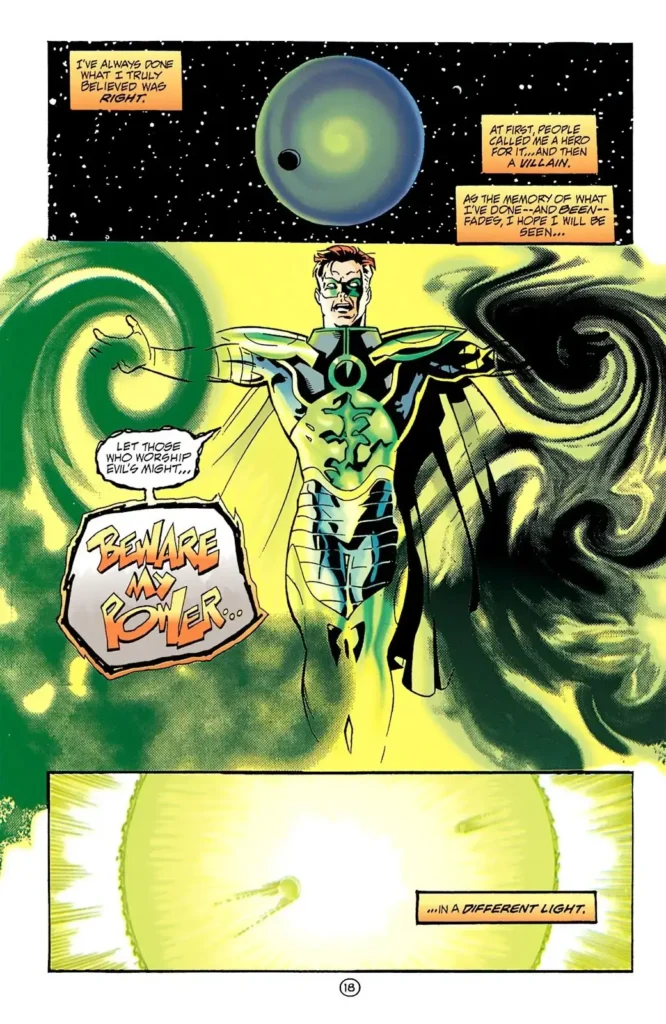
Hal Jordan’s first genuine step toward redemption comes in the 1996 four-issue miniseries The Final Night, written by Karl Kesel, where he sacrifices his life to reignite Earth’s dying sun.
A sun-consuming cosmic entity called the Sun-Eater arrives in Earth’s solar system. The Justice League, the New Gods, and the world’s greatest minds fail to stop it, leaving Earth freezing to death within days.
Kyle Rayner seeks out Hal in deep space to ask for his help. Before returning to Earth, Hal makes a series of quiet farewell visits to key figures in his past: he heals a paralyzed John Stewart, visits the grave of Oliver Queen, speaks with Guy Gardner and Tom Kalmaku, and meets with Carol Ferris, who reminds him that he has always put saving others above his own happiness.
The Sacrifice at the Sun
Lex Luthor and Ray Palmer (Atom) engineer a suicidal plan: inducing a controlled supernova within the sun to incinerate the Sun-Eater from the inside. Hal Jordan steps in to take on the fatal mission himself. He saves the young hero Ferro (Ferro Lad) from sacrificing his life, taking his place instead.
Hal flies straight into the heart of the dying star. Reciting the iconic Green Lantern Oath while unleashing every bit of Parallax’s cosmic energy, Hal destroys the Sun-Eater and reignites the sun, giving his life to save the entire planet.
His funeral, depicted in Green Lantern Vol. 3 #81 and special aftermath issues, gathers heroes from around the globe over the ruins of Coast City. Carol Ferris states that his sacrifice proves who he truly was at heart, and even Batman acknowledges the magnitude of Hal’s final act of redemption.
Comparative Timeline: Key Hal Jordan Parallax Events
| Year | Event | Publication | Significance |
|---|---|---|---|
| 1993 | Coast City destroyed | Superman: The Man of Steel #25 | Emotional trigger for Hal’s breakdown |
| 1994 | Emerald Twilight | Green Lantern Vol. 3 #48–50 | Hal kills Sinestro and Kilowog; becomes Parallax |
| 1994 | Zero Hour | Zero Hour: Crisis in Time #4–0 | Hal attempts to rewrite all of history |
| 1996 | Final Night | Final Night #1–4 | Hal sacrifices himself to reignite the sun |
| 1999 | Day of Judgment | Day of Judgment #1–4 | Hal becomes the new host of the Spectre |
| 2004 | Green Lantern: Rebirth | GL: Rebirth #1–6 | Parallax revealed as an ancient entity; Hal returns |
Day of Judgment — Becoming the Spirit of Vengeance (1999)
In summary, the 1999 event Day of Judgment, written by Geoff Johns, transforms Hal Jordan from a redeemed sacrifice into something even stranger: the human host of The Spectre, DC’s divine Spirit of Vengeance.
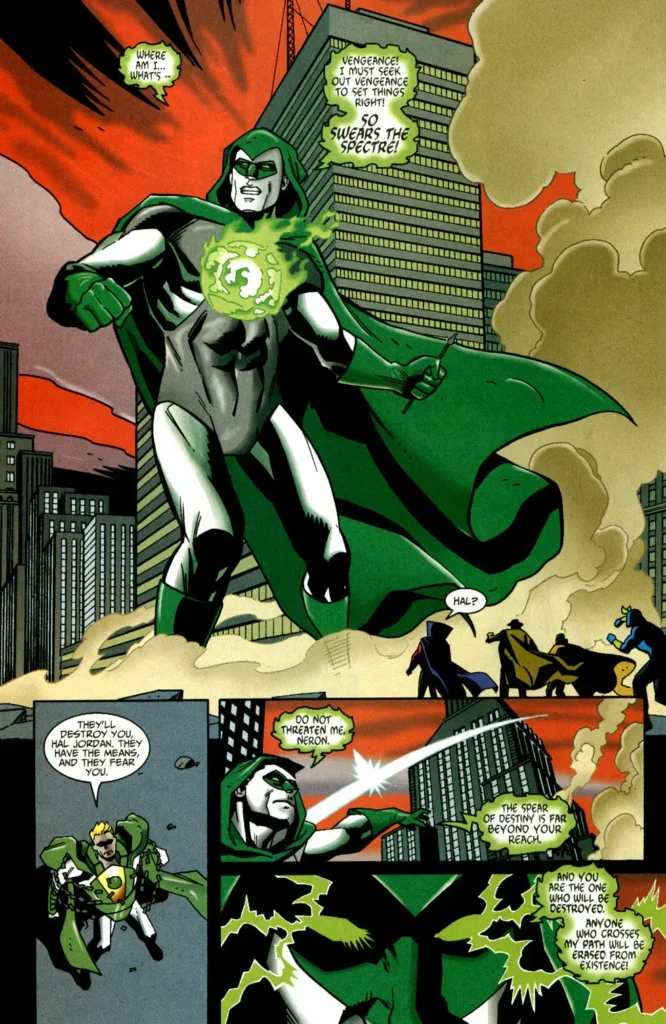
The crisis begins when the former host, Jim Corrigan, willingly leaves his post for Heaven. The demon Etrigan manipulates the fallen angel Asmodel into fusing with the unanchored Spectre, freezing Hell and unleashing demon hordes across Earth that defeat the Justice League with ease. Earth’s mystic heroes, forming the Sentinels of Magic, split into teams to resolve the crisis. A team led by Zatanna travels directly to Purgatory to find a soul with sufficient willpower and a genuine desire for redemption to bond with the cosmic entity.
There, among fallen heroes, they find Hal Jordan. Hal argues that having just saved the world from freezing in The Final Night, he now wants to save it from the fires of Hell. While heroes like Batman remain deeply skeptical of Hal’s stability, Hal steps forward voluntarily. He admits openly that he is a murderer who does not deserve divine power, but accepts the burden as penance. During the final battle on Earth, after being briefly shattered into glass by the entity, Hal throws himself into the core of the Spectre. It is precisely his combination of monumental willpower and sincere desire for redemption that allows him to win control over Asmodel and Neron, turning the Spirit of Vengeance into a Spirit of Redemption.
Wrestling With Cosmic Fury
As the Spectre, hal jordan parallax evolves into something far more complex. He struggles visibly with the role’s inherent rage while seeking to guide souls toward genuine repentance rather than instant punishment.
In JLA #35, Hal’s intense struggle to manage divine wrath draws the concern of the angel Zauriel and the Justice League. Standing before his former allies in the Watchtower, Hal manifests terrifying forms, arguing that because every human soul carries a seed of evil, humanity technically stands subject to divine wrath. Martian Manhunter uses his telepathy to intervene, bringing calm to the situation and leading Hal to realize that divine judgment must always be tempered by compassion, mercy, and love for his former friends.
In his 2001 solo series The Spectre (Vol. 4), written by J.M. DeMatteis, Hal tests his new philosophy on figures like Two-Face (Harvey Dent), realizing that true redemption cannot be forced by divine power; it must stem from an individual’s free choice. Throughout this era, Hal stays emotionally tethered to humanity through his young niece, Helen Jordan, while battling cosmic forces like Monsieur Stigma, a demonic entity embodying eternal despair.
Green Lantern Rebirth — The Truth About Parallax (2004)
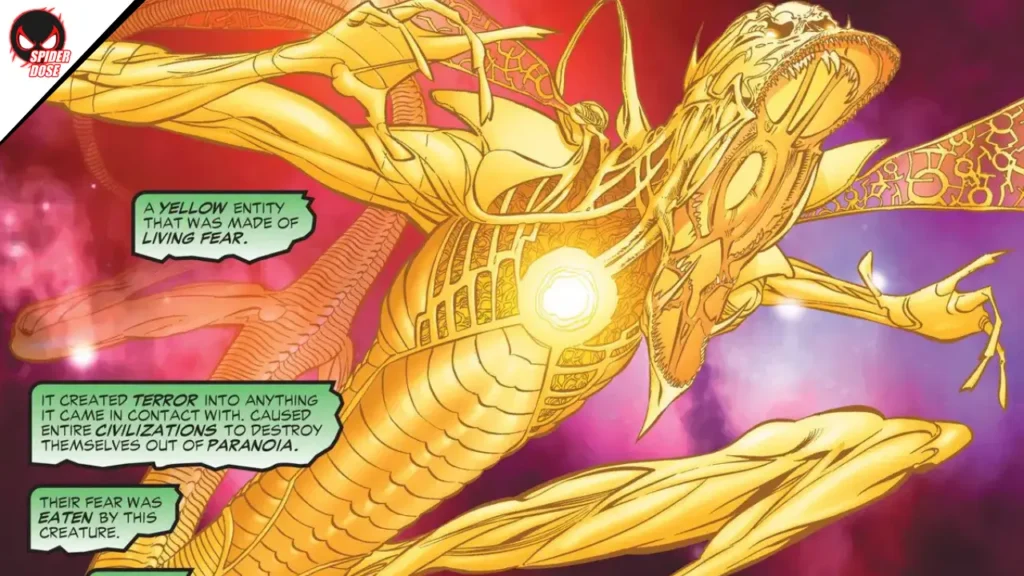
What is Parallax in DC Comics? Parallax is an ancient cosmic parasite — the living embodiment of fear itself — that was imprisoned inside the Green Lantern Central Power Battery billions of years ago by the Guardians of the Universe. Over eons, its existence was hidden, giving rise to the mystery behind the “yellow impurity” that rendered Green Lantern rings ineffective against the color yellow.
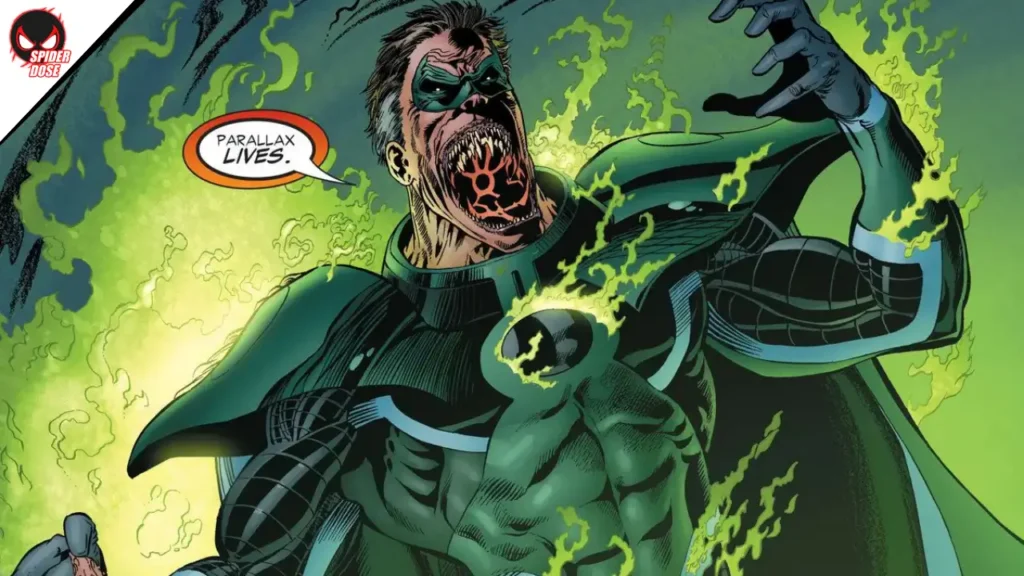
Written by Geoff Johns with artwork by Ethan Van Sciver, the six-issue miniseries Green Lantern: Rebirth (2004–2005) provides the definitive recontextualization of Hal’s decade-long downfall. The story reveals that Parallax had been sleeping inside the Central Battery until it awakened and infected Hal through his ring long before Coast City fell. The destruction of his home city was merely the devastating emotional trigger Parallax required to break Hal’s will and take full control of his mind.
During moments of supreme willpower over the years — most notably his self-sacrifice in The Final Night — Hal’s true personality had managed to break through the entity’s grasp temporarily.
Sinestro’s Long Game
The mastermind behind this corruption is revealed to be Sinestro. Imprisoned inside the Central Power Battery years prior following his defeat by Hal, Sinestro discovered the yellow fear parasite slumbering within.
Using his own yellow ring power, Sinestro made contact with Parallax and spent years orchestrating events from inside the Battery. He deliberately manipulated Hal’s grief to drive him insane, transforming the Corps’ greatest hero into its most tragic villain as revenge for Hal exposing his dictatorial rule on Korugar decades earlier.
The Return
Hal Jordan officially returns to life in Rebirth. Guided by Ganthet and aided by Kyle Rayner, Guy Gardner, John Stewart, and Kilowog, Hal’s soul is reunited with his physical body stored inside a coffin brought back from the sun.
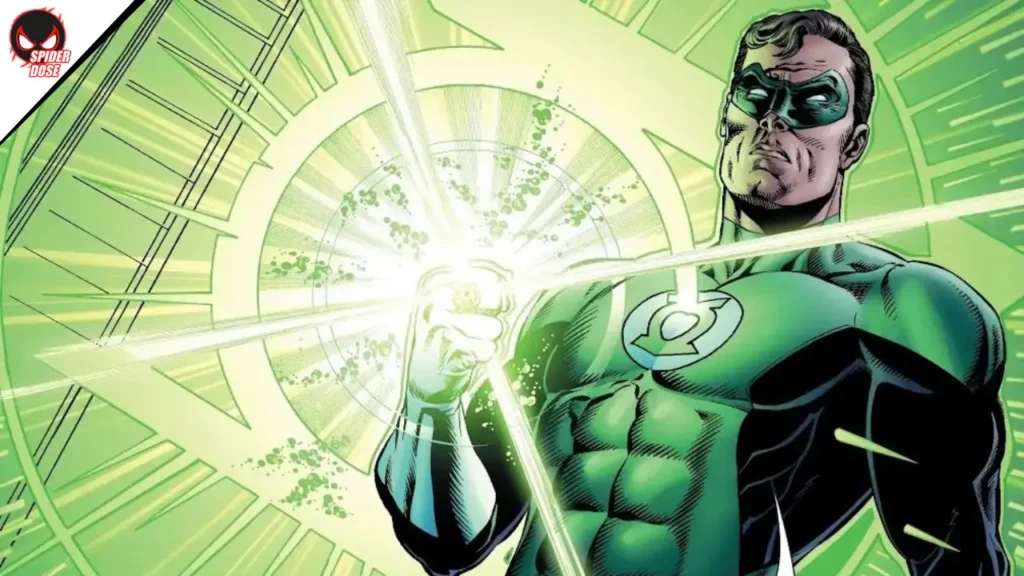
Before leaping into the final fight, Hal resolves a tense standoff with a distrustful Batman by punching him squarely in the jaw — a moment that earns him an approving smirk from Guy Gardner. Together, the five Earth Lanterns pool their distinct willpower styles to battle the fear entity in space, stripping Parallax from its hosts and imprisoning it once again inside the Central Battery.
With Parallax neutralised, the Guardians officially restore and expand the Green Lantern Corps. While veterans welcome Hal back, newer recruits remain wary of his past, setting up the dynamic for his post-Rebirth adventures.
Comparing the Two Identities: Hal Jordan vs. Parallax
| Characteristic | Hal Jordan (Hero) | Hal Jordan as Parallax |
|---|---|---|
| Core Motivation | Protect the innocent and uphold cosmic justice. | Reconstruct Coast City and rewrite history at any cost. |
| Relationship With Fear | Overcomes great fear through pure willpower. | Weaponizes fear as a cosmic parasitic power. |
| Treatment of Allies | Trains, mentors, and stands by fellow Lanterns. | Strips allies of their rings and kills Kilowog. |
| Moral Boundaries | Refuses to kill; values human life above all. | Snaps Sinestro’s neck and destroys the Guardians. |
| Relationship With Rules | Bound by the Green Lantern Oath. | Shatters the Corps’ laws and drains the Battery. |
| Ultimate Goal | Selfless service and sacrifice for the universe. | Total control to build a tragedy-free reality. |
What the Hal Jordan Parallax Arc Means for Comics
The hal jordan parallax saga stands as one of the most meticulously constructed long-form character arcs in superhero fiction. What makes it endure is not simply the shock value of a hero falling from grace, but the profound human grief driving that fall.
Hal did not turn evil out of hunger for power or malice. He broke because he suffered an unimaginable loss and was offered condemnation by the Guardians rather than compassion. Furthermore, his journey toward redemption spanned nearly a decade across Emerald Twilight, Zero Hour, The Final Night, Day of Judgment, and Rebirth — requiring him to earn his way back step by step.
Comics historians often note that villain turns only resonate long-term when the character’s core identity remains recognizable through the tragedy. The hal jordan parallax narrative endures because Hal’s defining traits — his immense love, unyielding will, and willingness to sacrifice everything — are the very qualities that broke him, and ultimately the traits that brought him home.
The Legacy That Outlasts the Arc
Today, Parallax remains a central pillar of DC Comics lore. The revelation of the yellow impurity as a fear parasite unlocked the concept of the Emotional Spectrum, paving the way for Geoff Johns to create the Sinestro Corps, the Red Lanterns, the Blue Lanterns, and events like Blackest Night. Without the hal jordan parallax arc, the modern Green Lantern mythos as we know it would not exist.
Frequently Asked Questions
Why did Hal Jordan become Parallax?
Hal Jordan succumbed to overwhelming grief after the warlord Mongul and the Cyborg Superman (Hank Henshaw) destroyed his hometown, Coast City, killing all seven million inhabitants in Superman: The Man of Steel #25. When the Guardians of the Universe reprimanded him for using his ring to construct a temporary replica of the city, Hal snapped, destroyed the Green Lantern Corps, and absorbed the power of the Central Power Battery. In 2004, Green Lantern: Rebirth established that Hal was also under the silent, parasitic influence of Parallax, an ancient entity of pure fear that had infected his mind through the ring.
Is Parallax the same as Hal Jordan?
No, they are distinct entities. Parallax is an ancient, sentient parasite that embodies fear on the Emotional Spectrum, while Hal Jordan is the human Green Lantern who served as its host. The hal jordan parallax combination refers strictly to the period during which Hal was possessed and driven mad by the entity. Geoff Johns formally established this distinction in Green Lantern: Rebirth #1–6, separating the hero’s true spirit from the cosmic parasite that controlled him.
Did Hal Jordan actually kill Kilowog?
Yes. During the climax of Emerald Twilight on Oa, Hal incinerates his old friend and drill instructor Kilowog with ring energy after a tragic confrontation. Kilowog is later resurrected prior to Green Lantern: Rebirth when Kyle Rayner surrenders his cosmic energy as Ion to rebuild the Central Battery and restore the Corps.
The journey of hal jordan parallax — from the catastrophic ruins of Coast City to a worldwide funeral attended by every major DC hero, from silent possession by an ancient fear entity to a triumphant resurrection marked by a punch that earned even Guy Gardner’s immediate respect — stands as a masterclass in long-form comic storytelling. By taking its most steadfast hero through the darkest depths of grief, corruption, and divine atonement, DC Comics proved that true redemption is never instant or easy, but rather earned through relentless sacrifice and unwavering will.