






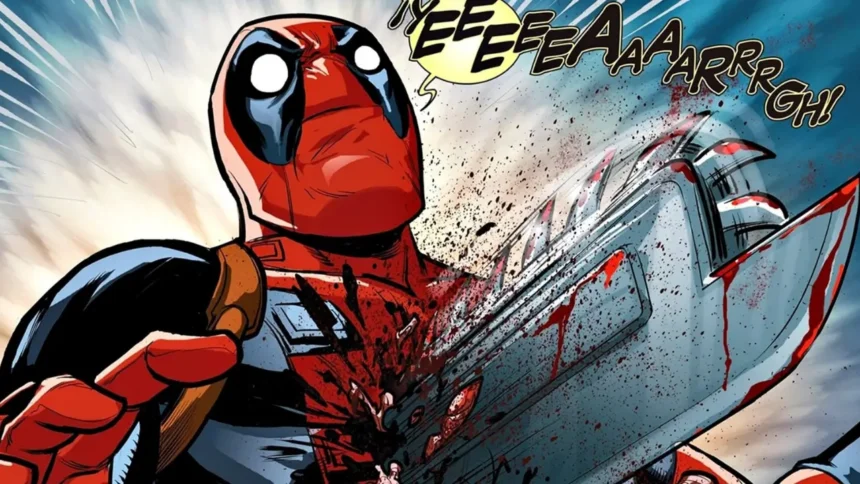
Deadpool has been decapitated, incinerated, disintegrated, and even erased from existence — and he still came back for the next issue. The short answer is: technically, no, Deadpool cannot die under normal circumstances. However, his immortality isn’t magic — it’s a violent, non-stop biological war occurring inside his body. To truly understand if Wade Wilson can be killed, we have to look closely at his unique anatomy, his comic book history, and the rare weapons capable of bypassing his healing factor.
The question “can Deadpool die” has fascinated Marvel readers since the character’s debut in New Mutants #98 in 1991. Decades of storylines have pushed the limits of his biology, his psychology, and even his relationship with cosmic forces. What emerges is one of the most complex survival mechanisms in all of comics.
The Biology of Wade Wilson: Cancer vs. Healing Factor
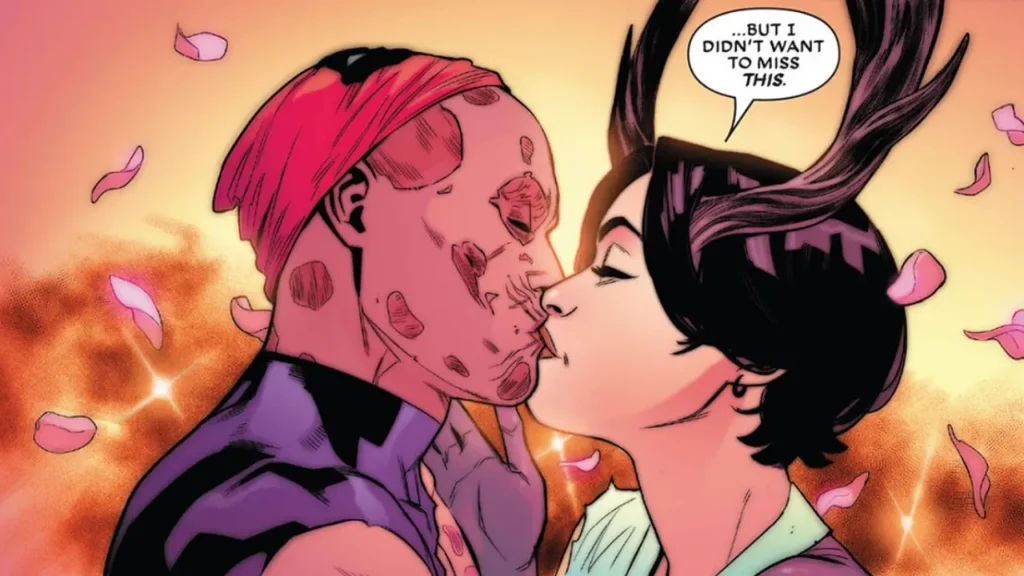
The answer to whether Deadpool can die begins at the cellular level. Wade Wilson was a mercenary diagnosed with terminal cancer before he entered the Weapon X program — the same covert military project that bonded adamantium to Wolverine’s skeleton. However, where Logan received adamantium, Wade received something different: a synthetic version of Logan’s mutant healing factor, injected directly into his dying body.


That decision created a biological paradox with no real precedent in Marvel science.
The Internal War That Never Ends
Wade’s cancer does not disappear after the treatment. Instead, his engineered healing factor and his aggressive cancer cells enter a permanent state of war. The cancer cells multiply at an extraordinary rate, while the healing factor regenerates healthy tissue at an equally extraordinary rate. Neither side ever wins.
This biological stalemate is precisely what makes Deadpool so difficult to kill. His cells are constantly dying and regenerating simultaneously. A wound that would kill a normal human in seconds regenerates in Deadpool’s body within moments — because his healing factor is already operating at maximum capacity at all times.
Furthermore, the disfiguration visible on Wade’s skin is a direct result of this internal conflict. His body’s surface reflects the ongoing cellular chaos beneath — tumors forming and dissolving in real time, leaving behind the scarred texture fans recognize.


What Happens If the Cancer Is Cured?
This question was explored in the comics with alarming results. If Wade’s cancer were to be fully eliminated, his healing factor would no longer have an opposing force to regulate it. As a result, the factor would continue producing cells at its accelerated rate with nothing to balance it — generating uncontrolled tumors and tissue growth that would, theoretically, cause catastrophic physical failure. This outcome was demonstrated when Super-Skrulls attempted to replicate Deadpool’s biology and experienced precisely that consequence.
Therefore, the cancer is not simply a tragedy in Wade’s life. It is also, paradoxically, the engine of his survival.
The Cosmic Curse: Thanos and Lady Death
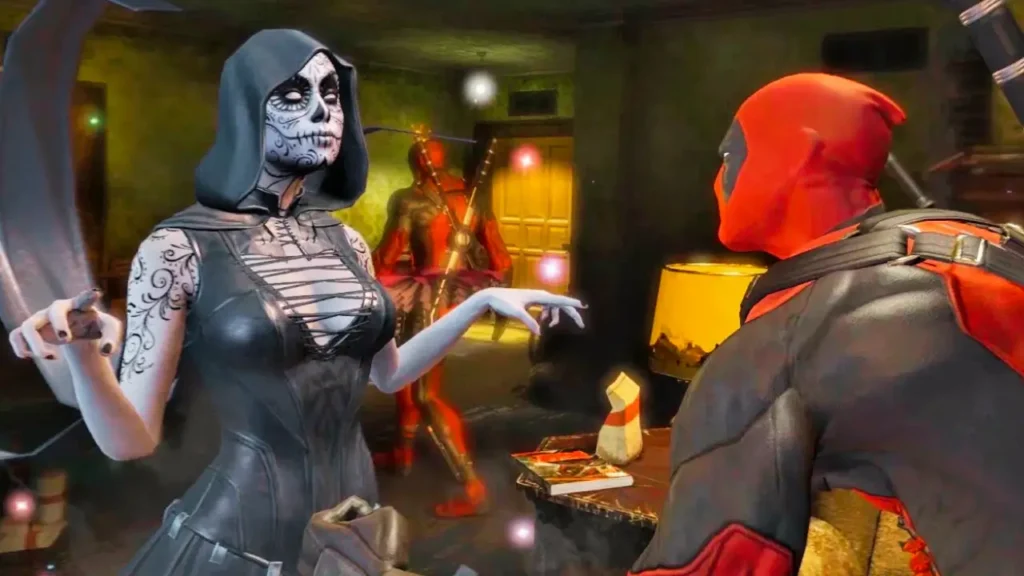
Can Deadpool die? For a significant period in Marvel Comics continuity, the answer was definitively no — and not because of biology alone. The explanation involves a love triangle of cosmic proportions that most viewers of the film franchise have never encountered.
In the comics, Deadpool develops a romantic obsession with the personification of Death herself — known as Lady Death. This entity, represented as a skeletal woman draped in black, is the same cosmic force that the Mad Titan Thanos worships and pursues. Thanos, consumed by jealousy over Wade’s unique connection to Death, intervened at a cosmological level.
Using a form of necromantic cosmic power, Thanos placed a curse on Deadpool — an absolute prohibition against dying. The curse ensured that Death would never accept Wade’s soul, regardless of the severity of his injuries. He could be killed, technically, but never permanently. Death would always return him.
This storyline reinforced the idea that Deadpool operates in a category entirely his own. His mortality is not simply a matter of biology. It intersects with cosmic law, divine jealousy, and metaphysical exile.



It is worth noting that this curse has since been lifted in more recent Marvel storylines. However, the cosmic backstory shaped the character’s identity for decades and remains essential context for understanding his relationship with death — and why writers at Marvel have so consistently treated him as functionally immortal.
For readers curious about how this dynamic might play out on screen, the ongoing speculation around whether Deadpool will appear in Avengers: Doomsday raises interesting questions about how his unique mortality rules would interact with the MCU’s current cosmic storylines.
Can Anything Actually Kill Deadpool? The Known Vulnerabilities
Can Deadpool die under any conditions? Yes — but the bar is extraordinarily high. Several specific weapons and scenarios have been identified across decades of Marvel Comics as capable of neutralizing his healing factor.
Carbonadium
Carbonadium is a radioactive metal of Soviet origin, most closely associated with the villain Omega Red. Unlike adamantium, which is inert, carbonadium emits a low-level radiation that specifically interferes with accelerated healing factors. A wound inflicted by a carbonadium blade or projectile heals dramatically slower — slow enough that, if a vital organ is struck and the weapon remains in place, Wade Wilson could theoretically die before regeneration catches up.
This vulnerability is one of the most practical in comics terms, because carbonadium exists as a material that can be fashioned into weapons. It does not require cosmic power or mystical authority to use.
The Muramasa Blade
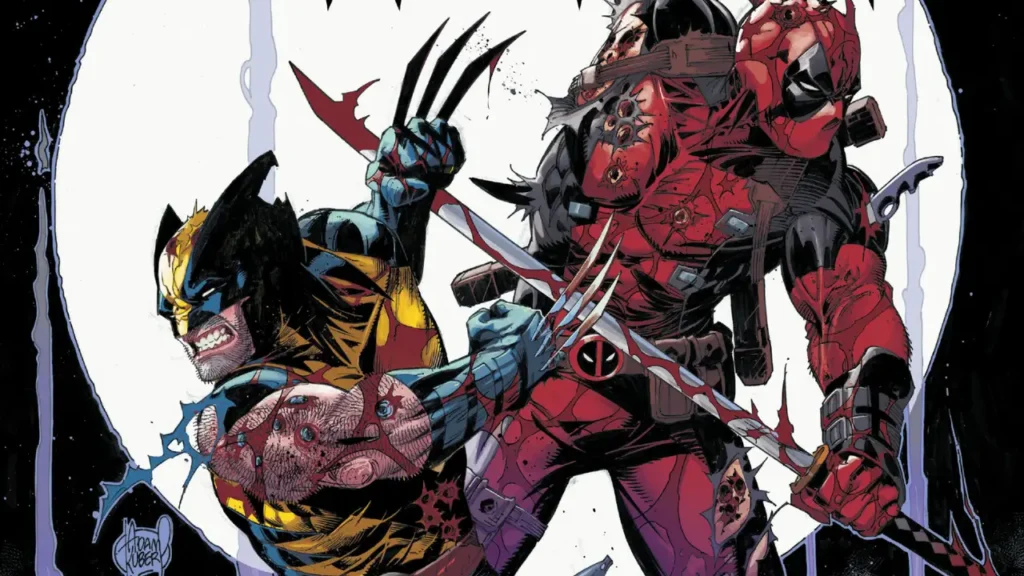
The Muramasa Blade operates on an entirely different principle. This mystical sword, forged with a fragment of Wolverine’s own soul, cuts at a molecular level and suppresses regenerative abilities. It has been used against both Wolverine and Deadpool in the comics. A wound from the Muramasa Blade does not regenerate normally — it stays open. Against someone whose survival depends entirely on regeneration, this weapon is genuinely lethal.
Complete Molecular Destruction
The most reliable method for permanently ending Deadpool is the elimination of all genetic material. If no DNA survives — through total incineration, nuclear-level disintegration, or the reality-altering power of a cosmic artifact like the Infinity Gauntlet — there is nothing left for the healing factor to rebuild from. Some comic storylines have explored detailed analyses of such cosmic threats, confirming that molecular erasure represents the true upper limit of his vulnerability.
Marvel’s Top Healing Factors Compared
| Character | Regeneration Speed | Source of Power | Can They Die? |
|---|---|---|---|
| Wolverine | Fast (minutes to hours) | Mutant mutation | Yes — drowning, adamantium poisoning, cellular depletion |
| Deadpool | Ultra-fast (seconds) | Artificial mutant + cancer synergy | Virtually no — requires full molecular destruction |
| The Hulk | Near-instantaneous | Gamma radiation | No — The One Below All revives him |
Deadpool in the Broader Marvel Universe
Can Deadpool die in contexts beyond his solo adventures? That question becomes more complicated when he intersects with other major Marvel figures. Characters like Doctor Doom, whose mastery of both sorcery and technology places him among Marvel’s most dangerous threats, represent the rare category of antagonist who might theoretically access the means — mystical blades, reality manipulation, molecular destruction — that could genuinely threaten Wade.
In that sense, Deadpool’s immortality is not absolute. It is dependent on the power level of whoever is opposing him. Against street-level threats, he is effectively unkillable. Against cosmic or sufficiently empowered mystical opponents, the equation shifts.
FAQ: Anatomy and Immortality Quick Answers
Can Deadpool survive decapitation?
Yes. Wade Wilson can survive being beheaded. His head remains conscious and functional independently of his body. Reattachment accelerates full recovery, but some comic storylines suggest his body could eventually regenerate entirely from the surviving head or torso.
Can Deadpool die of old age?
No. His healing factor operates at the cellular level, continuously repairing damage and halting the degradation associated with aging. Various Marvel timeline stories have depicted Wade Wilson alive and functional thousands of years into the future, with no sign of age-related decline.
Does Deadpool feel pain?
Yes. His neurological system works normally. Every injury registers fully — every burn, cut, broken bone, and gunshot wound produces pain signals identical to those of an unmodified human. Over years of constant injury and recovery, Wade has developed an extreme psychological tolerance, which many writers interpret as a contributing factor to his erratic behavior.
Has Deadpool ever actually died permanently in the comics?
There have been story arcs that presented his death as final, only for subsequent writers to reverse the outcome. The combination of his healing biology and, historically, his cosmic curse has meant that permanent death has never held. His closest brush with true finality occurred during storylines involving the Infinity Gauntlet — which, notably, is also the scenario most frequently cited as the one genuine exception to his survival.
What is the fastest way to stop Deadpool in a fight?
Practically speaking, carbonadium weapons offer the most realistic tactical option. They do not require cosmic power and are available as a material in the Marvel universe. A carbonadium projectile through a vital organ buys enough time for other measures to be taken. Without that material, opponents generally rely on physical containment rather than lethal force.