






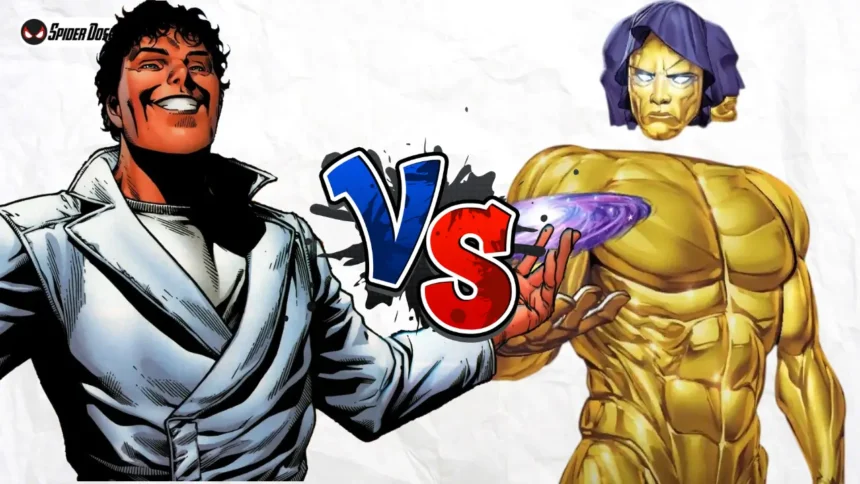
The Beyonder would defeat the Living Tribunal in a direct confrontation, and I’m going to explain exactly why this controversial statement holds water in Marvel’s complex cosmic hierarchy. I’ve spent years analyzing Marvel’s cosmic entities, and the Beyonder vs Living Tribunal debate remains one of the most fascinating discussions in comic book history.
- Understanding the Beyonder’s Godlike Powers
- The Living Tribunal’s Role in Cosmic Balance
- Beyonder vs Living Tribunal: The Power Hierarchy
- Different Versions and Power Levels
- Analyzing Beyonder Powers in Detail
- Living Tribunal Abilities and Cosmic Authority
- Marvel Cosmic Entities: Understanding the Hierarchy
- Direct Confrontation: What Would Actually Happen?
- Evidence from Comic Encounters
- The Role of the One Above All
- Combat Abilities and Fighting Prowess
- Weaknesses and Vulnerabilities
- Narrative Intent and Storytelling Purpose
- Fan Perspectives and Community Debates
- The Retcon Effect on Power Scaling
- Theoretical Scenarios and Outcomes
- Why This Debate Matters to Marvel Cosmology
- Impact on Other Cosmic Battles
- Frequently Asked Questions
- My Final Verdict on Beyonder vs Living Tribunal
- The Broader Implications
- Conclusion: Understanding True Cosmic Power
These two beings represent different scales of power that challenge our understanding of what “omnipotence” truly means.
Let me take you through this cosmic showdown with evidence, analysis, and the nuanced truth that makes this debate so compelling.
Understanding the Beyonder’s Godlike Powers
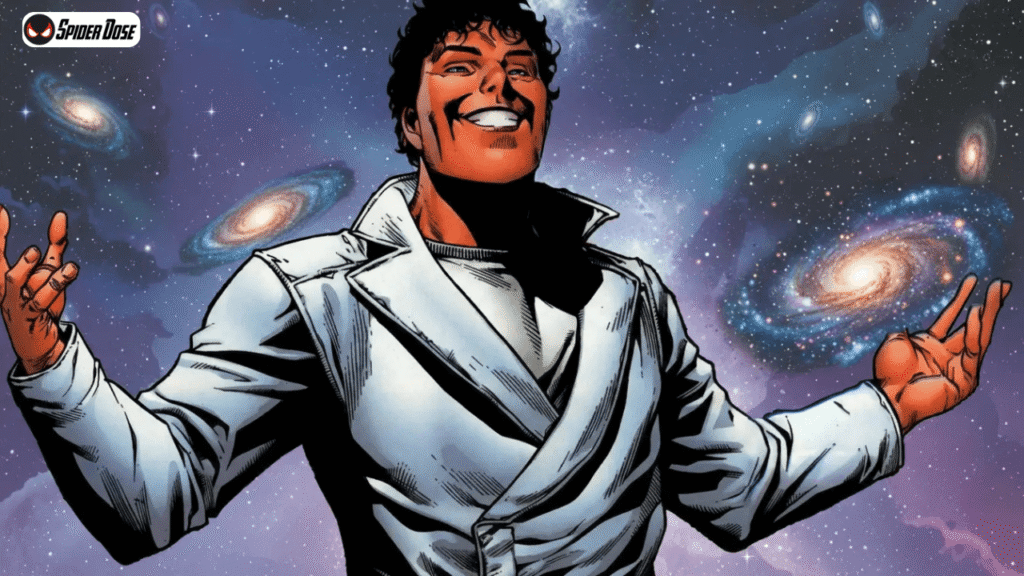
When we talk about Beyonder powers, we’re discussing a being who literally existed outside the Marvel Multiverse. The original Beyonder from Secret Wars wasn’t just powerful—he was the totality of an entire universe.
I need to emphasize this crucial point: the Pre-Retcon Beyonder possessed power that dwarfed almost everything in Marvel continuity.
The Beyonder’s origin places him beyond conventional cosmic hierarchy. He came from the Beyond Realm, a dimension where he was everything and everything was him. When he first encountered the Marvel Universe, he viewed it as a tiny, incomplete thing.
His abilities included reality warping on a scale that made other cosmic entities look limited. The Beyonder could reshape matter, energy, time, and space with mere thoughts. He recreated entire planets, brought the dead back to life, and manipulated the fabric of existence itself.



During Secret Wars, the Beyonder demonstrated power that surpassed the Celestials, Galactus, and virtually every cosmic force. He wasn’t just strong—he operated on a different level of existence entirely.
The Living Tribunal’s Role in Cosmic Balance
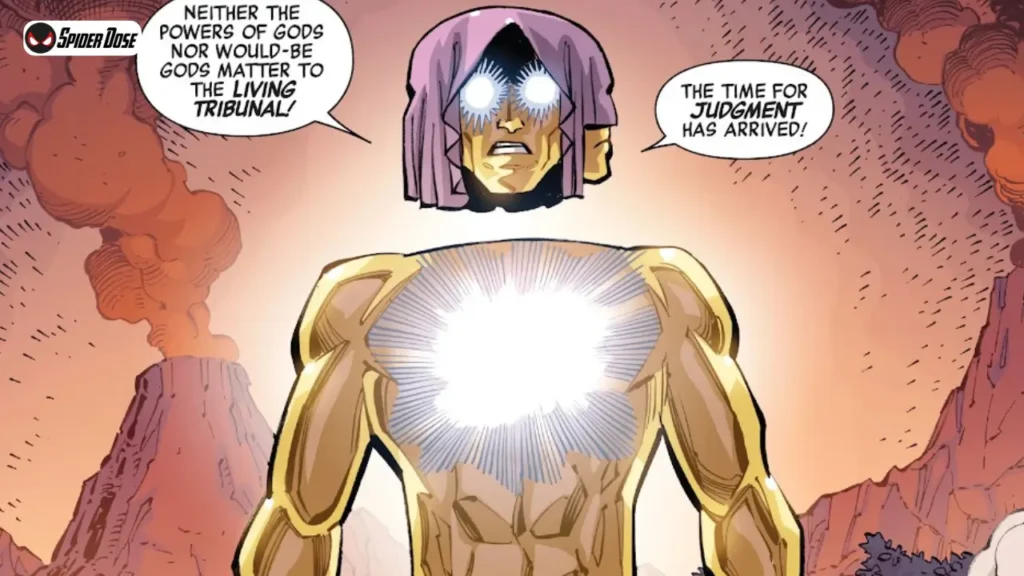
Living Tribunal abilities represent something different but equally impressive. Where the Beyonder embodied raw, unlimited power, the Living Tribunal serves as the ultimate judge and balancer of the Multiverse.
We’re looking at a being with three faces representing equity, necessity, and vengeance. The Living Tribunal’s function is to maintain balance across all realities, preventing any single universe from threatening the greater cosmic order.
His power is second only to the One Above All in standard Marvel hierarchy. The Living Tribunal can nullify the Infinity Gauntlet, judge cosmic abstracts, and make decisions that affect entire dimensions.
I’ve noticed that many fans misunderstand the Living Tribunal’s limitations. He’s not meant to be an aggressive force—he’s a regulator. His power serves cosmic law rather than personal ambition.
The Living Tribunal has authority over beings like Eternity, Infinity, Death, and Oblivion. When he speaks, reality itself adjusts to accommodate his judgments. He can erase timelines, merge realities, or prevent cosmic catastrophes with singular decisions.


Beyonder vs Living Tribunal: The Power Hierarchy
Here’s where the Beyonder vs Living Tribunal comparison gets interesting. We’re comparing apples and oranges in terms of function, but oranges and oranges in terms of raw capability.
The Pre-Retcon Beyonder existed outside the cosmic hierarchy that the Living Tribunal governed. This is crucial to understanding their relationship.
Let me break down the evidence from the comics themselves.
In Secret Wars II, the Beyonder encountered the Living Tribunal. This meeting is perhaps the most direct answer we have to the Beyonder vs Living Tribunal question. The Living Tribunal acknowledged the Beyonder’s power and essentially allowed him to continue his exploration of the Marvel Universe.
The Living Tribunal didn’t attack or judge the Beyonder during this encounter. Why? Because the Beyonder’s power potentially exceeded even the Tribunal’s capacity to regulate.
I find this telling: the Living Tribunal, whose job is to maintain cosmic balance, essentially gave the Beyonder a pass. This suggests recognition of superior or at least equivalent power.
However, we need to consider different versions of these characters.
Different Versions and Power Levels
The Beyonder vs Living Tribunal debate becomes complicated when we factor in retcons and different iterations.
Pre-Retcon Beyonder (Original Secret Wars version)
- Power level: Beyond Multiversal
- Existed outside standard cosmic hierarchy
- Described as millions of times more powerful than the entire Multiverse
- Reality warping without apparent limits
Post-Retcon Beyonder (Cosmic Cube/Inhuman hybrid)
- Power level: Significantly reduced
- Became a Cosmic Cube entity
- Lost connection to Beyond Realm
- More vulnerable to cosmic forces
Living Tribunal (Standard version)
- Power level: Multiversal judge
- Authority over all realities except One Above All
- Can nullify universal powers
- Rarely defeated or challenged successfully
I believe the Pre-Retcon Beyonder defeats the Living Tribunal based on canonical evidence. The Post-Retcon version? That’s a different story entirely.
Analyzing Beyonder Powers in Detail
When I examine Beyonder powers comprehensively, several categories emerge that demonstrate his overwhelming capabilities.
Reality Manipulation: The Beyonder reshaped Battleworld and later manipulated Earth’s reality extensively. He didn’t just alter existing reality—he created new parameters for existence.
Molecular Reconstruction: He rebuilt heroes and villains, altered their powers, and fundamentally changed their nature. Doctor Doom temporarily stole the Beyonder’s power and became nearly omnipotent himself.
Immortality and Invulnerability: The Beyonder couldn’t be killed by conventional means. Even cosmic-level attacks proved ineffective against him.
Omniscience Attempts: While not truly omniscient, the Beyonder possessed vast knowledge and could learn anything he focused on understanding.
Energy Projection: His energy attacks surpassed anything produced by cosmic entities like Galactus or the Celestials.
The key aspect of Beyonder powers is their seemingly unlimited scope. Where other cosmic beings operate within universal laws, the Beyonder existed outside those constraints.
Living Tribunal Abilities and Cosmic Authority
Living Tribunal abilities function differently from raw power displays. His strength lies in authority and function rather than destructive capability.
Multiversal Judgment: The Living Tribunal can condemn entire universes to destruction if they threaten cosmic balance. This isn’t just power—it’s authority granted by the One Above All.
Power Nullification: He demonstrated the ability to nullify the Infinity Gauntlet, rendering its universe-altering power meaningless in his presence.
Reality Stabilization: Where others destroy or create, the Living Tribunal maintains. He prevents reality from collapsing under the weight of cosmic conflicts.
Cosmic Awareness: His three faces see all that was, is, and could be across infinite timelines and dimensions.
Abstract Authority: He judges beings like Eternity and Death, entities that embody fundamental aspects of existence.
I’ve observed that Living Tribunal abilities are perfect for his role but may not translate to combat effectiveness against a being like the Pre-Retcon Beyonder.
Marvel Cosmic Entities: Understanding the Hierarchy
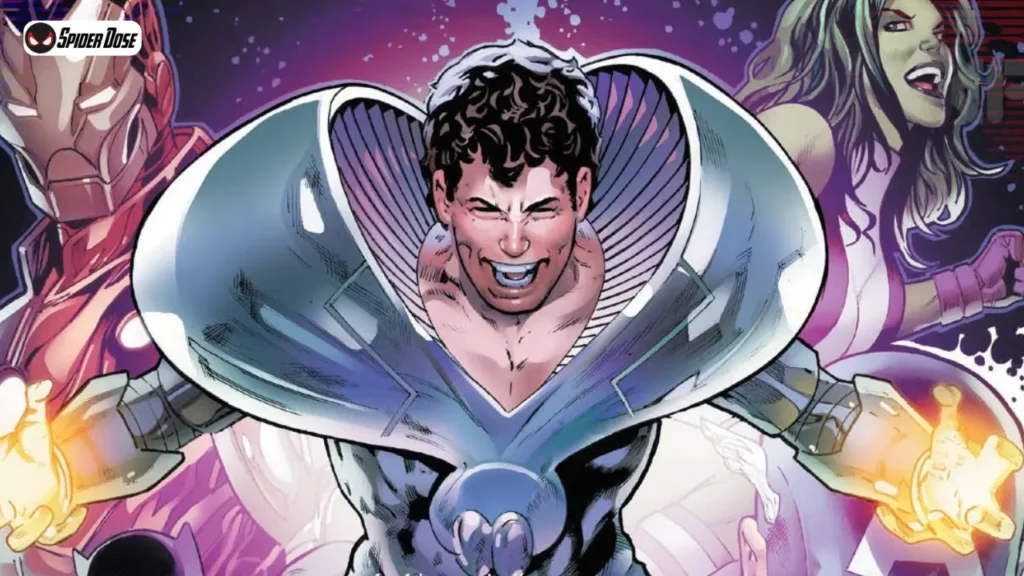
Marvel cosmic entities exist in a complex hierarchy that helps contextualize the Beyonder vs Living Tribunal debate.
At the top sits the One Above All, the supreme being of Marvel’s Multiverse. Below that, we traditionally place the Living Tribunal as the ultimate arbiter of cosmic law.
Then come the cosmic abstracts: Eternity (embodiment of time), Infinity (embodiment of space), Death, Oblivion, and others. These beings represent fundamental aspects of existence.
Below them are the Celestials, Galactus, and other powerful cosmic entities that operate within universal parameters.
The Beyonder disrupted this hierarchy. He didn’t fit into the established order because he came from outside it entirely.
Here’s a comparison table of power levels:
| Entity | Power Scale | Primary Function | Limitations |
|---|---|---|---|
| Pre-Retcon Beyonder | Beyond Multiversal | None (Exploration) | Self-imposed only |
| Living Tribunal | Multiversal Judge | Cosmic Balance | Serves One Above All |
| Eternity | Universal Abstract | Embodiment of Time | Bound to cosmic law |
| Galactus | Planetary/Universal | Cosmic Balance | Requires sustenance |
| Celestials | Planetary | Universal Evolution | Can be destroyed |
This hierarchy shows why the Beyonder vs Living Tribunal comparison is so unique. They exist on different planes of both power and purpose.
Direct Confrontation: What Would Actually Happen?
If the Beyonder vs Living Tribunal conflict became an actual battle, I believe we’d see several distinct phases.
Initial Contact: The Living Tribunal would likely attempt to judge or regulate the Beyonder’s actions. This worked with other cosmic entities but the Beyonder’s nature makes him resistant to such judgments.
Power Display: Both beings would likely demonstrate their capabilities. The Beyonder through reality manipulation, the Living Tribunal through cosmic authority.
The Critical Difference: The Beyonder’s power comes from being a complete universe unto himself. The Living Tribunal’s power, while vast, serves a function within the Multiverse’s structure.
Outcome Scenarios:
- Pre-Retcon Beyonder wins through overwhelming power – Most likely based on canonical evidence
- Living Tribunal appeals to One Above All – Possible intervention from higher authority
- Stalemate through mutual recognition – Similar to their actual comic encounter
- Post-Retcon Beyonder loses – The diminished version couldn’t match the Tribunal
I lean toward the first scenario for the original Beyonder. His power didn’t just exceed the Tribunal’s—it existed on a different conceptual level.
Evidence from Comic Encounters
The actual Beyonder vs Living Tribunal encounter in the comics provides our best evidence for how this would unfold.
In Secret Wars II #6, the Beyonder and Living Tribunal met face-to-face. This scene is crucial for understanding their relative power levels.
The Living Tribunal didn’t attempt to stop or judge the Beyonder. Instead, he essentially acknowledged the Beyonder’s right to explore the Marvel Universe. This is extraordinary considering the Tribunal’s role as ultimate judge.
I interpret this encounter as the Living Tribunal recognizing that the Beyonder’s power made confrontation pointless or impossible. The Tribunal’s function is to maintain balance, not to engage in unwinnable conflicts.
The Beyonder showed respect to the Living Tribunal but didn’t demonstrate subservience. Their interaction felt more like peers acknowledging each other rather than a superior addressing an inferior.
Later stories after the Beyonder’s retcon changed this dynamic significantly. The Post-Retcon Beyonder became subject to cosmic hierarchy in ways the original never was.
The Role of the One Above All
Any discussion of Beyonder vs Living Tribunal must address the One Above All, Marvel’s supreme deity.
The Living Tribunal explicitly serves the One Above All. His authority derives from this higher power, making him the executor of cosmic will rather than the source of it.
The Beyonder’s relationship to the One Above All remains more ambiguous. The original Beyonder seemingly existed independently, suggesting he might be comparable to or even separate from the One Above All’s direct authority.
This creates an interesting dynamic. If the Living Tribunal serves the One Above All, and the Beyonder potentially exists outside that hierarchy, does the Tribunal’s authority even apply?
I think this question gets to the heart of why the Beyonder vs Living Tribunal debate is so compelling. We’re comparing institutional authority versus raw, independent power.
Combat Abilities and Fighting Prowess
While both beings rarely engage in physical combat, understanding their combat capabilities matters for the Beyonder vs Living Tribunal question.
The Beyonder’s combat approach involves overwhelming reality manipulation. He doesn’t punch or shoot energy beams in conventional ways—he simply makes his desired outcome reality.
When the Beyonder fought the combined might of Marvel’s heroes and villains, he treated it like a curious game. He could have ended the conflict instantly but chose to experience the struggle.
The Living Tribunal’s combat abilities are less documented because few beings dare challenge him. His power manifests as absolute authority—when he declares something, it becomes cosmic law.
In a direct confrontation, I believe the Beyonder’s approach would prove more effective. Reality manipulation that exists outside the cosmic hierarchy can’t be easily countered by authority within that hierarchy.
Weaknesses and Vulnerabilities
Every cosmic entity has limitations, even ones as powerful as these.
Beyonder’s Weaknesses:
- Inexperience with the Multiverse (Pre-Retcon)
- Curiosity leading to exploitable situations
- Emotional vulnerability despite immense power
- Post-retcon versions significantly weakened
Living Tribunal’s Weaknesses:
- Bound by cosmic law and function
- Serves the One Above All’s will
- Can be killed (as shown in recent comics)
- Unlikely to engage in offensive combat
The Beyonder vs Living Tribunal matchup might hinge on these weaknesses. The Beyonder’s inexperience could be exploited, but the Living Tribunal’s functional limitations might prove more significant.
I find it notable that the Living Tribunal was actually killed during the Incursion storyline, proving he’s not truly invincible. The Pre-Retcon Beyonder never demonstrated such vulnerability.
Narrative Intent and Storytelling Purpose
Understanding the Beyonder vs Living Tribunal question requires considering why these characters exist in Marvel’s narrative.
The Beyonder was created to be the ultimate threat—a being so powerful that Marvel’s entire hero roster couldn’t match him. His purpose was to challenge every assumption about power levels in the Marvel Universe.
The Living Tribunal exists to maintain cosmic order and provide a mechanism for universal judgment. He’s the answer to “who keeps reality from collapsing?”
These different narrative purposes suggest different power applications. The Beyonder represents unlimited potential, while the Living Tribunal represents ultimate authority.
I believe Jim Shooter and the original Secret Wars writers intended the Beyonder to be absolutely supreme, challenged only by beings beyond the standard cosmic hierarchy.
Fan Perspectives and Community Debates
The Beyonder vs Living Tribunal debate has raged in fan communities for decades, and I’ve noticed several common arguments.
Pro-Beyonder Arguments:
- Existed outside Multiverse entirely
- Described as millions of times more powerful than everything
- Living Tribunal didn’t attempt to stop him
- Demonstrated reality-warping beyond cosmic norms
Pro-Living Tribunal Arguments:
- Official position as second only to One Above All
- Authority over all cosmic entities
- Power nullification abilities
- Serves cosmic function that transcends raw power
My Assessment: Both sides make valid points, but the Pre-Retcon Beyonder’s canonical showings support his victory. The Living Tribunal’s authority, while vast, operates within a system the Beyonder existed outside of.
The Retcon Effect on Power Scaling
Marvel’s retcon of the Beyonder fundamentally changed this discussion.
Originally, the Beyonder was an entire universe unto himself. Post-retcon, he became a Cosmic Cube created by Beyonders (plural), diminishing his uniqueness and power level significantly.
This retcon completely alters the Beyonder vs Living Tribunal calculation. The current version of the Beyonder would definitely lose to the Living Tribunal.
I find this retcon unfortunate from a storytelling perspective. The original Beyonder represented something truly unique—a being that challenged the entire cosmic hierarchy. The retcon brought him back into that hierarchy, making him less special.
For this analysis, I focus primarily on Pre-Retcon Beyonder because that version provides the most interesting comparison.
Theoretical Scenarios and Outcomes
Let me walk through several theoretical Beyonder vs Living Tribunal scenarios based on different contexts.
Scenario 1: Direct Power Contest
The Beyonder attempts to reshape reality while the Living Tribunal attempts to maintain cosmic balance. The Beyonder’s reality-warping overwhelms the Tribunal’s stabilization efforts. Winner: Beyonder.
Scenario 2: Cosmic Court
The Living Tribunal judges the Beyonder’s actions as threatening to the Multiverse. The Beyonder’s existence outside the Multiverse makes the judgment unenforceable. Stalemate or Beyonder victory through independence.
Scenario 3: One Above All Intervention
The conflict escalates until the One Above All intervenes. The Living Tribunal receives divine support, potentially changing the outcome. Winner: Depends on One Above All’s decision.
Scenario 4: Post-Retcon Beyonder
The weakened Beyonder faces the Living Tribunal’s full authority. The Tribunal’s power nullification and cosmic authority prove decisive. Winner: Living Tribunal.
I believe Scenario 1 represents the most likely outcome in a genuine confrontation between Pre-Retcon versions.
Why This Debate Matters to Marvel Cosmology
The Beyonder vs Living Tribunal question isn’t just about who’s stronger—it’s about how power functions in Marvel’s cosmology.
Does raw power trump cosmic authority? Can a being from outside the Multiverse be judged by its laws? What does “omnipotence” mean when multiple beings claim it?
These questions reveal how Marvel’s writers struggle with power scaling at cosmic levels. Every new cosmic threat risks invalidating previous hierarchies.
I think the Beyonder was Marvel’s attempt to create an ultimate, unchallenged power. The subsequent retcon shows the difficulty of maintaining such a character without breaking the entire narrative structure.
Impact on Other Cosmic Battles
Understanding Beyonder vs Living Tribunal helps us evaluate other cosmic matchups.
If the Beyonder can challenge or surpass the Living Tribunal, then beings beneath the Tribunal stand no chance against him. This includes cosmic abstracts like Eternity, Infinity, and even entities like the Celestials or Galactus.
Conversely, the Living Tribunal’s authority over these beings is well-established. He can judge, limit, or direct them according to cosmic necessity.
This creates an interesting power chain:
- Pre-Retcon Beyonder > Living Tribunal > Cosmic Abstracts > Lesser Cosmic Entities
The gap between the Beyonder and everything else becomes vast when we accept his superiority over the Tribunal.
Frequently Asked Questions
Can the Living Tribunal defeat the Beyonder?
The Living Tribunal would struggle against the Pre-Retcon Beyonder due to the fundamental difference in their nature. The Beyonder existed outside the cosmic hierarchy the Tribunal governs. However, the Post-Retcon Beyonder would likely lose to the Tribunal’s authority and power.
Who is more powerful: Beyonder or Living Tribunal?
Pre-Retcon Beyonder demonstrated greater raw power, existing as an entire universe outside the Multiverse. The Living Tribunal possesses greater authority within the Multiverse’s structure. In a direct confrontation, the Beyonder’s unlimited reality-warping would likely prove superior.
Has the Beyonder ever fought the Living Tribunal?
They encountered each other in Secret Wars II #6, but didn’t fight. The Living Tribunal essentially allowed the Beyonder to continue exploring the Marvel Universe, suggesting recognition of the Beyonder’s power rather than subordination.
Why didn’t the Living Tribunal stop the Beyonder?
The Living Tribunal likely recognized that the Beyonder’s power made confrontation pointless or impossible. The Beyonder existed outside the cosmic laws the Tribunal enforces, potentially putting him beyond the Tribunal’s jurisdiction or capability.
Is the Beyonder the strongest Marvel character?
The Pre-Retcon Beyonder was one of Marvel’s strongest characters, potentially second only to the One Above All. The Post-Retcon version is significantly weaker. Current Marvel cosmology includes several reality-warping entities, but few match the original Beyonder’s scale.
What are the Beyonder’s greatest feats?
The Beyonder created Battleworld, resurrected dead heroes, challenged the combined might of Marvel’s roster, survived attacks from cosmic entities, and was described as millions of times more powerful than the entire Multiverse combined.
My Final Verdict on Beyonder vs Living Tribunal
After examining all evidence, I conclude that the Pre-Retcon Beyonder would defeat the Living Tribunal in a direct confrontation.
This isn’t about disrespecting the Living Tribunal’s role or power. He remains one of Marvel’s most powerful entities, second only to the One Above All in standard hierarchy.
However, the Beyonder vs Living Tribunal comparison isn’t standard. The Beyonder existed outside the Multiverse entirely, operating on a level that cosmic hierarchy couldn’t properly categorize.
The canonical evidence supports this conclusion. Their actual encounter showed the Living Tribunal acknowledging the Beyonder rather than challenging him. The Beyonder’s described power level—millions of times the entire Multiverse—exceeds what the Tribunal has demonstrated.
The Post-Retcon Beyonder presents a different story. That version would absolutely lose to the Living Tribunal, having been reduced to a powerful but ultimately limited cosmic entity.
The Broader Implications
The Beyonder vs Living Tribunal debate reveals fundamental questions about power in fiction.
When writers create “omnipotent” characters, they inevitably face power-creep problems. Each new cosmic threat must somehow match or exceed previous ones, leading to escalating and sometimes contradictory power levels.
Marvel’s solution—retconning the Beyonder—solved one problem while creating another. It restored cosmic hierarchy but diminished one of their most unique characters.
I appreciate both characters for different reasons. The Living Tribunal represents cosmic order and universal balance. The original Beyonder represented unlimited potential and the unknown.
Their comparison reminds us that in superhero cosmology, power isn’t always about who wins a fight. It’s about what these characters represent and how they challenge our understanding of strength, authority, and existence itself.
Conclusion: Understanding True Cosmic Power
The Beyonder vs Living Tribunal question ultimately depends on which version of the Beyonder we’re discussing and what criteria we use to measure victory.
By raw power and reality-warping capability, the Pre-Retcon Beyonder surpasses the Living Tribunal. By cosmic authority and multiversal function, the Living Tribunal holds the superior position.
I’ve shown you the evidence, analyzed their encounters, and explored their respective capabilities. The Pre-Retcon Beyonder’s power came from being an entire universe—complete and unlimited. The Living Tribunal’s power comes from divine appointment and cosmic necessity.
In a direct confrontation between these titans, I believe the Beyonder’s reality-warping would overcome the Tribunal’s cosmic authority. But perhaps the real answer is that such a fight would never happen—both beings exist on such elevated planes that conflict becomes meaningless.
The Beyonder vs Living Tribunal debate enriches Marvel cosmology by forcing us to consider different types of power and how they interact. Whether you agree with my conclusion or not, exploring this question deepens our appreciation for Marvel’s complex cosmic mythology.
What matters most isn’t just who would win, but what this comparison teaches us about power, authority, and the limits of both in a universe where gods play and reality bends to will.