

Have you ever wondered what it’s like to share your mind with multiple distinct personalities, each with their own memories, skills, and moral compass? Moon Knight stands as one of Marvel’s most psychologically complex characters, and understanding the Moon Knight personalities is essential to appreciating this enigmatic hero. Unlike many superheroes who hide behind a single mask, Marc Spector’s journey involves navigating multiple identities that vie for control of his body and destiny.
- Understanding the Foundation of Moon Knight Personalities
- Marc Spector: The Original Identity
- Steven Grant: The Millionaire Persona
- Jake Lockley: The Street-Level Intelligence Gatherer
- Mr. Knight: The Consultant Persona
- Khonshu: The Divine Voice
- The Psychology Behind Moon Knight Personalities
- Lesser-Known Moon Knight Personalities
- How the Moon Knight Personalities Interact
- The Impact of Trauma on Moon Knight Personalities
- Moon Knight Personalities in Different Media
- The Role of Memory in Moon Knight Personalities
- Moon Knight Personalities and Relationships
- The Moral Complexity of Moon Knight Personalities
- Moon Knight Personalities and Mental Health Representation
- The Future of Moon Knight Personalities
- Comparing Moon Knight Personalities to Other Split Characters
- Practical Guide: Identifying Moon Knight Personalities
- Common Misconceptions About Moon Knight Personalities
- The Cultural Impact of Moon Knight Personalities
- Conclusion: The Enduring Mystery of Moon Knight Personalities
- Frequently Asked Questions
The character has captivated audiences through comics, animated series, and most recently, the Disney+ show that brought these fractured personalities to mainstream attention. Each identity serves a unique purpose, creating a fascinating exploration of mental health, trauma, and heroism.
This comprehensive guide explores every facet of Moon Knight’s personalities, examining how they formed, what drives them, and how they work together—or against each other—in Marvel’s most unpredictable hero.

Understanding the Foundation of Moon Knight Personalities
The Moon Knight personalities didn’t emerge randomly. They developed as a response to severe childhood trauma and later experiences that pushed Marc Spector beyond normal psychological limits.
Marc Spector grew up in Chicago as the son of a rabbi who survived the Holocaust. His childhood was marked by violence and tragedy, creating the perfect conditions for dissociative identity disorder to develop. The trauma he experienced created fractures in his psyche that would later manifest as distinct personalities.
When Marc became a mercenary, he buried his trauma beneath layers of violence and detachment. But everything changed during a mission in Egypt, where he was betrayed and left for dead. This near-death experience near a statue of Khonshu, the Egyptian moon god, became the catalyst that fully awakened the Moon Knight personalities.
The resurrection—whether supernatural or psychological—gave birth to a new identity structure. Marc Spector no longer operated alone. He became a vessel for multiple distinct personalities, each emerging to handle different aspects of his life and mission.

You Might Also Like: Top 10 Strongest Marvel Characters
Marc Spector: The Original Identity
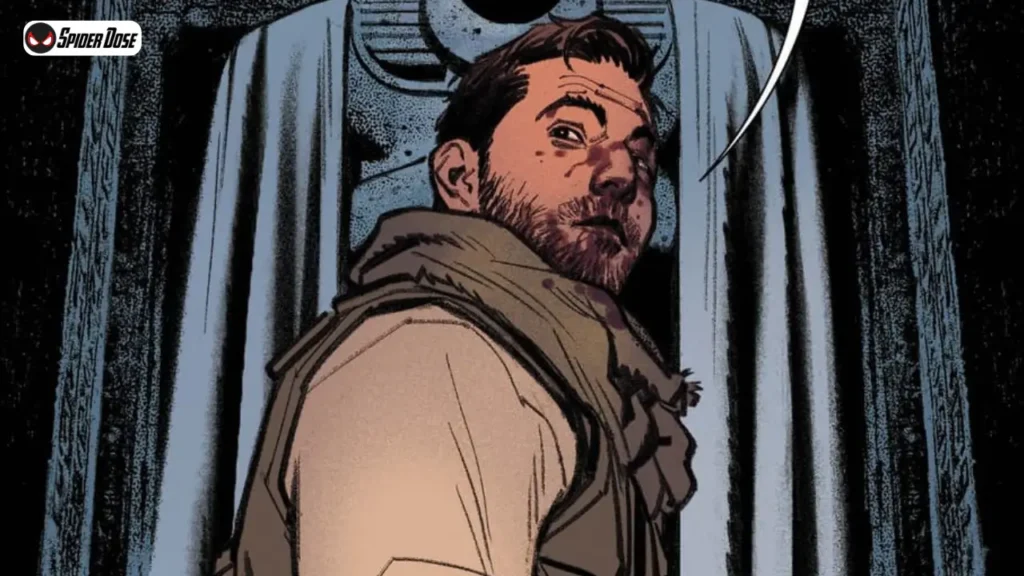
Marc Spector represents the core personality from which all other Moon Knight personalities emerged. He’s a former CIA operative turned mercenary, carrying the weight of countless violent acts and moral compromises.
As the primary identity, Marc possesses exceptional combat skills, tactical intelligence, and an intimate knowledge of warfare. His military training and mercenary experience make him a formidable fighter even without supernatural abilities.
Marc’s personality is characterized by guilt, self-loathing, and a desperate need for redemption. He sees himself as fundamentally broken, unworthy of happiness or peace. This darkness drives much of his behavior and influences how the other personalities manifest.
His relationship with violence is complicated. Marc understands brutality intimately, having both inflicted and endured it throughout his life. This expertise becomes crucial when Moon Knight needs to operate in the criminal underworld.
The trauma Marc carries from his childhood and mercenary days creates the psychological space where other identities can flourish. He serves as the foundation upon which the Moon Knight personalities are built.
Steven Grant: The Millionaire Persona
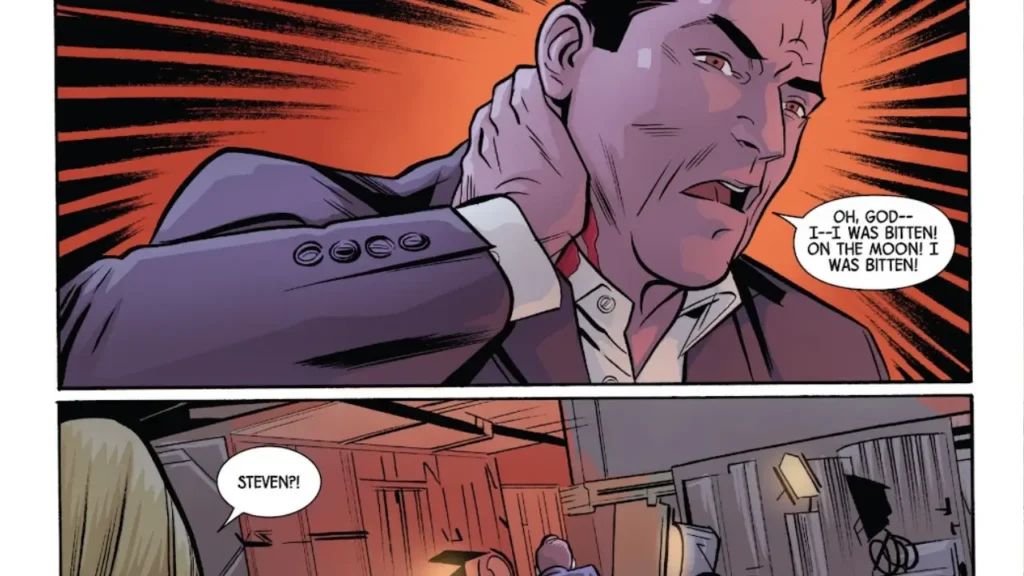
Steven Grant emerged as one of the most sophisticated Moon Knight personalities, originally conceived as a cover identity but evolving into something far more complex.
In the comics, Steven represents wealth, sophistication, and social standing. He’s a successful businessman and millionaire who moves through high society with ease, providing Moon Knight with resources and connections that Marc Spector’s reputation could never access.
Steven’s personality differs markedly from Marc’s. He’s charming, cultured, and comfortable in elegant settings. While Marc operates in shadows and violence, Steven navigates boardrooms and charity galas.
The Disney+ series reimagined Steven significantly, presenting him as a mild-mannered British museum gift shop employee with no knowledge of his other identities. This version of Steven is gentle, ethical, and horrified by violence—the complete opposite of Marc.
This interpretation of the Moon Knight personalities emphasized the protective function of dissociation. Steven exists to shield himself from Marc’s traumatic memories and violent actions, creating a life free from the burden of their shared past.
Steven’s British accent and different mannerisms demonstrate how completely distinct the Moon Knight personalities can be. He’s not simply Marc pretending; he genuinely believes he’s a separate person with his own history and identity.
Jake Lockley: The Street-Level Intelligence Gatherer
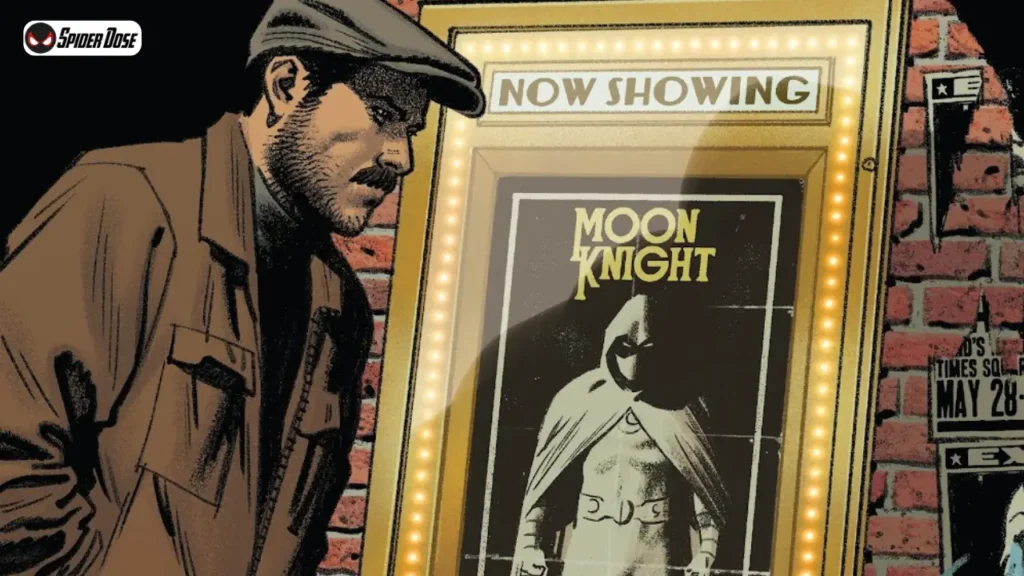
Jake Lockley represents the working-class persona among the Moon Knight personalities, serving as the character’s eyes and ears on the street.
As a cab driver, Jake has access to information that neither Marc nor Steven could easily obtain. He builds relationships with everyday people—other drivers, diner workers, informants—who trust him and share what they know.
Jake’s personality is grounded, practical, and personable. He speaks the language of the streets and understands the rhythms of urban life. This makes him invaluable for gathering intelligence about criminal activities and street-level threats.
The Moon Knight personalities work together through Jake’s network. Information he collects during his shifts often leads to missions that Marc executes as Moon Knight. This cooperation showcases how the different identities can complement each other.
Jake maintains several close relationships with recurring characters like Bertrand Crawley, a homeless informant, and Gena Landers, a diner owner. These connections ground Moon Knight in the reality of ordinary people’s struggles.
In recent comic storylines and the Disney+ series finale, Jake has been portrayed with darker implications. Rather than just a friendly cab driver, he’s suggested to be more violent and less controlled than the other Moon Knight personalities.
Mr. Knight: The Consultant Persona
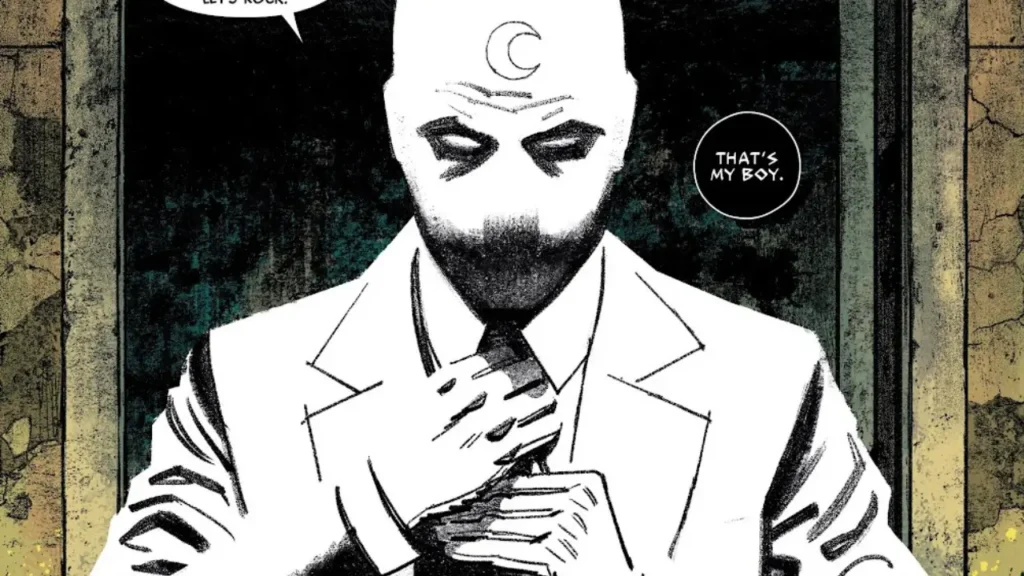
Mr. Knight emerged as one of the newer Moon Knight personalities, representing a different approach to heroism and justice.
Unlike the traditional Moon Knight costume, Mr. Knight wears an immaculate white three-piece suit with a mask. This identity works as a consultant to police and individuals seeking help, operating more like a detective than a vigilante.
Mr. Knight’s personality is calm, analytical, and methodical. He uses intelligence and investigation rather than immediate violence, though he’s perfectly capable of fighting when necessary.
This persona allows the Moon Knight personalities to engage with law enforcement and legitimate authorities in ways that the more brutal Moon Knight identity cannot. Mr. Knight can enter crime scenes, interview witnesses, and collaborate with police.
The white suit serves as both a calling card and a psychological tool. It’s pristine and professional, projecting an image of control and competence that contrasts sharply with the chaotic brutality of Moon Knight’s other appearances.
Mr. Knight demonstrates the evolution of the Moon Knight personalities over time. As the character developed, new identities emerged to handle new challenges and approaches to justice.
Khonshu: The Divine Voice
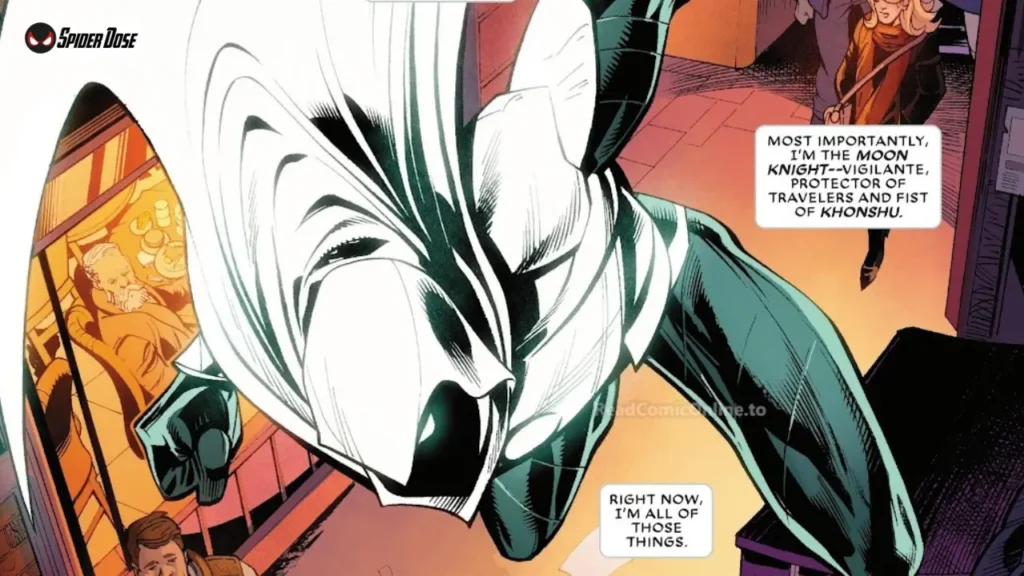
Whether Khonshu is truly a separate personality or an actual Egyptian god remains one of the most debated aspects of the Moon Knight personalities.
Khonshu claims to be the ancient Egyptian god of the moon, vengeance, and travelers. According to mythology, Khonshu resurrected Marc Spector in Egypt and now speaks through him, demanding service as his avatar.
The god’s personality is commanding, merciless, and utterly focused on vengeance. Khonshu shows no compassion for criminals and expects Moon Knight to dispense brutal justice without hesitation.
From a psychological perspective, Khonshu could represent Marc’s internalized justification for violence—a divine mandate that absolves him of responsibility for his brutal actions. This interpretation suggests Khonshu is another facet of the Moon Knight personalities rather than an external entity.
However, other Marvel characters can see and interact with Khonshu, suggesting supernatural reality. This ambiguity is intentional, keeping readers uncertain about what’s real and what’s manifestation of Marc’s fractured psyche.
Khonshu’s influence over the Moon Knight personalities varies. Sometimes he’s a commanding presence that directs Marc’s actions. Other times, Marc actively resists or ignores the supposed god’s demands.
The Psychology Behind Moon Knight Personalities
Understanding the Moon Knight personalities requires examining dissociative identity disorder (DID), the real condition that inspired the character.
DID develops as a response to severe trauma, typically during childhood. The mind creates separate identities as a coping mechanism, compartmentalizing traumatic experiences to protect the core personality from overwhelming psychological damage.
In Marc’s case, childhood trauma combined with his violent career created the perfect conditions for multiple personalities to emerge. Each identity handles specific situations or emotions that Marc himself cannot process.
The Moon Knight personalities demonstrate several key features of DID, including amnesia between switches, distinct behavioral patterns, and different skill sets. When Steven controls the body, he genuinely doesn’t remember what Marc did.
However, it’s important to note that Moon Knight is a fictional representation. Real DID presents differently and shouldn’t be stigmatized or sensationalized. The character uses the condition as a storytelling device rather than a clinical case study.
Marvel’s portrayal of the Moon Knight personalities has evolved to show more nuanced understanding. Modern interpretations emphasize cooperation between identities and the possibility of healing rather than just depicting fractured chaos.
Lesser-Known Moon Knight Personalities
Beyond the primary identities, several lesser-known Moon Knight personalities have appeared in various storylines.
Moonstone appeared in certain comic runs as a personality connected to Khonshu’s power. This identity manifests when the supernatural aspects of Moon Knight are most prominent.
Space Pilot emerged during a storyline where Marc believed he was piloting spacecraft. This personality demonstrated how new identities can form in response to new traumas or experiences.
The Inner Child represents Marc’s traumatized younger self, occasionally surfacing during moments of extreme stress or when confronting childhood memories.
The Fist of Khonshu is sometimes portrayed as a separate identity—the purely violent aspect that executes Khonshu’s vengeance without moral consideration.
These additional Moon Knight personalities show how complex and fluid the character’s mental landscape can be. New identities emerge as needed, while others fade when their purpose is served.
The existence of multiple lesser-known personalities emphasizes that Marc’s condition isn’t static. The Moon Knight personalities continue evolving, reflecting his ongoing psychological journey.
How the Moon Knight Personalities Interact
The relationship between Moon Knight personalities varies dramatically depending on the writer and storyline, but certain patterns emerge.
Sometimes the identities cooperate, sharing information and working toward common goals. Marc might gather intelligence as Jake, use Steven’s resources for funding, and execute missions as Moon Knight.
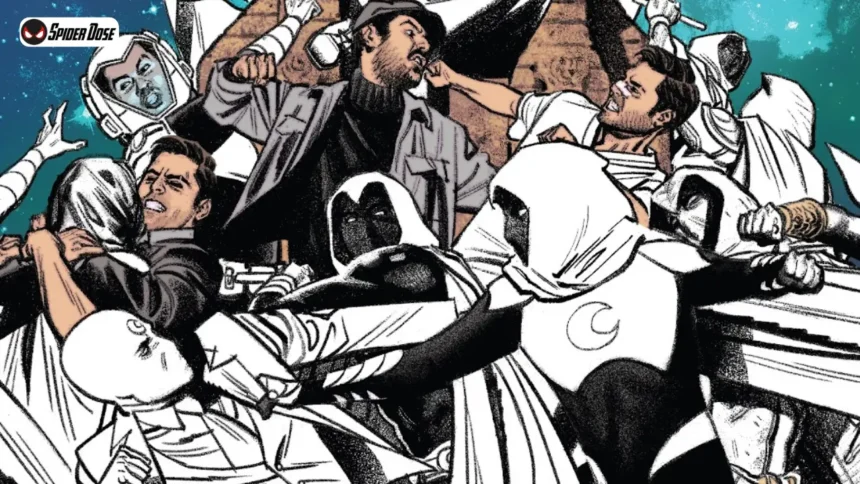
Other times, the personalities conflict sharply. Steven might be horrified by Marc’s violence, while Jake operates independently without informing the others. This creates internal tension that enemies can exploit.
Communication between identities happens through various methods. Sometimes they leave notes for each other. Other times, they experience brief moments of co-consciousness where multiple personalities are aware simultaneously.
The Disney+ series portrayed this interaction through reflective surfaces. Marc and Steven could see and speak with each other through mirrors, windows, and water reflections, creating a visual representation of internal dialogue.
Conflict among the Moon Knight personalities often centers on control and morality. Who decides what actions to take? Which identity gets to live the life they want? These questions create compelling internal drama.
Recent storylines have explored the possibility of integration—the identities working together as a system rather than fighting for dominance. This represents psychological growth and healing.
The Impact of Trauma on Moon Knight Personalities
Trauma serves as the foundation for understanding how and why the Moon Knight personalities developed.
Marc’s childhood trauma from witnessing violence and his father’s complicated relationship created the initial fractures. His psyche learned early that compartmentalization helped survive unbearable situations.
His career as a mercenary added layers of trauma. Each violent act, each moral compromise, each friend lost contributed to the psychological damage that deepened the divisions between personalities.
The Egypt incident—being beaten, left for dead, and experiencing what he believed was resurrection—served as the breaking point. This trauma was so severe that the Moon Knight personalities crystallized into distinct entities.
Each personality handles trauma differently. Marc carries the memories and guilt. Steven exists specifically to escape those memories. Jake maintains street-level connections that ground him in reality.
Understanding trauma’s role in the Moon Knight personalities adds depth to the character. He’s not simply “crazy” or “broken”—he’s a survivor who developed complex coping mechanisms.
Moon Knight Personalities in Different Media
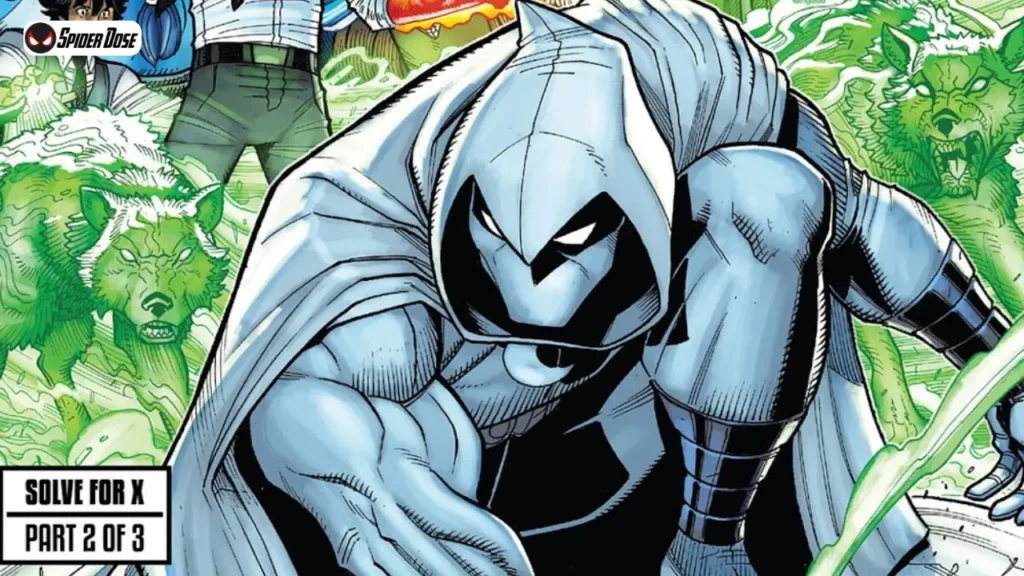
The portrayal of Moon Knight personalities has varied across different media adaptations.
In the original comics, the personalities were initially presented as deliberate disguises rather than genuine dissociative identities. Marc consciously created Steven and Jake as cover identities for his mission.
Later comic runs, particularly those by writers like Charlie Huston and Jeff Lemire, explored the personalities as genuine psychological phenomena. These versions emphasized the involuntary nature of the switches and the amnesia between identities.
The 2022 Disney+ series brought the Moon Knight personalities to mainstream audiences with a fresh interpretation. Oscar Isaac’s performance showcased the distinct mannerisms, accents, and personalities of Marc and Steven.
The show made Steven the initial viewpoint character, allowing audiences to discover Marc’s existence alongside him. This created an engaging mystery about which personality was “original” and who created whom.
Animation appearances have varied in their treatment of the Moon Knight personalities. Some shows emphasize the supernatural Khonshu connection over the psychological aspects.
Video game appearances typically simplify the concept, presenting Moon Knight as a single character with multiple costume options rather than exploring the distinct personalities.
The Role of Memory in Moon Knight Personalities
Memory dysfunction is central to understanding how Moon Knight personalities experience their shared existence.
Dissociative amnesia means that when one personality is in control, the others may not remember what happened. Steven can wake up with unexplained injuries and lost time, completely unaware of Marc’s activities.
This creates significant challenges in daily life. How do the Moon Knight personalities maintain jobs, relationships, or even basic routines when they don’t share memories consistently?
Different storylines handle memory sharing differently. Sometimes the personalities have complete amnesia barriers. Other times, they retain hazy impressions or emotional residue from each other’s experiences.
The Disney+ series used memory gaps as a primary source of horror and confusion. Steven’s terror at losing time and discovering evidence of violence he didn’t commit drove much of the early narrative tension.
Memory also plays a role in trauma processing. The Moon Knight personalities may exist partly because certain memories are too painful for Marc to integrate. Each identity shields the others from specific traumatic recollections.
Recent therapeutic approaches in the comics explore helping the personalities share memories more effectively, reducing confusion while respecting each identity’s need for psychological safety.
Moon Knight Personalities and Relationships
Maintaining relationships becomes extraordinarily complex when dealing with multiple Moon Knight personalities.
Romantic relationships face unique challenges. Does someone date Marc, Steven, or all the personalities collectively? Can they consent to a relationship that only some identities want?
Marlene Alraune, Marc’s longest-running love interest in the comics, struggled with these questions. She cared for Marc but also developed distinct relationships with his other personalities.
Friendships face similar complications. Jake’s street-level friends know him as a reliable cab driver, not a violent vigilante. When they discover the truth about the Moon Knight personalities, trust becomes complicated.
The Midnight Mission, Moon Knight’s community outreach center in recent comics, forces the personalities to work together to help people. This shared purpose creates cooperation that personal relationships sometimes can’t achieve.
Professional relationships—with other heroes, with informants, with enemies—depend on which personality is present. Some villains manipulate the conflicts between Moon Knight personalities to gain advantage.
Family relationships carry the deepest wounds. Marc’s father represents the source of childhood trauma, while his brother’s death added another layer. The personalities each process these family connections differently.
The Moral Complexity of Moon Knight Personalities
Each of the Moon Knight personalities brings different moral perspectives, creating ethical complexity.
Marc operates in moral gray areas, willing to use violence and intimidation to achieve justice. His mercenary background taught him that sometimes good people must do terrible things.
Steven, particularly in recent interpretations, represents a more conventional moral compass. He believes in rules, compassion, and non-violence whenever possible.
Jake’s morality is practical and street-focused. He helps everyday people with everyday problems, operating in the space between law enforcement and vigilante justice.
Khonshu, if considered a separate personality, demands absolute vengeance without mercy or redemption. This creates conflict with the other Moon Knight personalities who question whether brutal justice truly serves good.
These competing moral frameworks create compelling internal debates. When the personalities disagree about the right course of action, how do they resolve the conflict? Whose ethics should prevail?
The character’s moral complexity makes him fascinating. He’s not simply good or evil—he’s multiple perspectives struggling for dominance, each convinced of their own rightness.
Moon Knight Personalities and Mental Health Representation
Marvel’s handling of Moon Knight personalities has evolved alongside broader cultural understanding of mental health.
Early portrayals treated the multiple personalities primarily as a plot device or source of confusion. The psychological aspects were less important than the action and mystery they enabled.
Modern interpretations approach the Moon Knight personalities with greater sensitivity, consulting mental health professionals and acknowledging the real experiences of people with DID.
The Disney+ series, in particular, attempted to balance entertainment with respectful representation. While taking creative liberties, it showed the distress, confusion, and functional impairment that come with dissociative disorders.
However, concerns remain about reinforcing stereotypes that people with DID are violent or dangerous. The Moon Knight personalities specifically engage in brutal vigilante justice, which isn’t representative of real people with the condition.
Positive aspects of the representation include showing that multiple personalities can cooperate, that healing is possible, and that people with complex mental health conditions can be heroic.
The character opens conversations about trauma, dissociation, and coping mechanisms. When handled thoughtfully, the Moon Knight personalities can increase understanding and reduce stigma.
The Future of Moon Knight Personalities
As the character continues evolving, new directions for the Moon Knight personalities emerge.
Recent comics explore integration and cooperation rather than conflict. The personalities are learning to work as a system, respecting each other’s needs while pursuing shared goals.
The possibility of healing doesn’t mean erasing the personalities. Modern psychology recognizes that integration might mean better communication and cooperation rather than forcing all identities to merge into one.
New writers continue discovering fresh angles on the Moon Knight personalities. Some explore additional identities that emerge in response to new challenges or traumas.
The success of the Disney+ series suggests more mainstream media appearances are coming. Future adaptations will likely continue refining how they portray the multiple personalities.
Fan interest in the psychological aspects of the character has grown tremendously. Audiences want sophisticated exploration of the Moon Knight personalities rather than simple action stories.
The character’s future likely involves balancing supernatural elements with psychological grounding, maintaining the ambiguity about whether Khonshu is real while respecting the genuine complexity of dissociative identity disorder.
Comparing Moon Knight Personalities to Other Split Characters
Moon Knight isn’t the only character in fiction with multiple personalities, but the Moon Knight personalities have unique characteristics.
Unlike the Hulk, where transformation is triggered by anger and represents a single alternate identity, Moon Knight maintains several distinct personalities with different functions.
Compared to Legion from X-Men, whose hundreds of personalities each have different superpowers, the Moon Knight personalities are more grounded and limited in number.
The comparison to Two-Face is interesting—both characters involve duality and trauma, but Two-Face’s split is simpler, representing good versus evil rather than a complex system.
What sets the Moon Knight personalities apart is the combination of psychological realism with supernatural ambiguity. The character exists in the space between mental health representation and superhero mythology.
The personalities serve different purposes than similar characters. They’re not just about power or conflict—they represent different aspects of survival, coping, and identity.
Practical Guide: Identifying Moon Knight Personalities
For readers new to the character, identifying which of the Moon Knight personalities is present can be confusing. Here are key markers:
Marc Spector appears as the Moon Knight, wearing the white costume with a cape. He’s tactical, violent, and mission-focused. His dialogue tends to be terse and strategic.
Steven Grant in comics wears expensive suits and speaks with sophisticated vocabulary. In the Disney+ series, he has a British accent, works at a museum, and is anxious and gentle.
Jake Lockley drives a cab, speaks casually, and maintains street-level contacts. He’s approachable and friendly but capable when necessary.
Mr. Knight wears a white three-piece suit with a mask. He’s analytical, works with police, and approaches problems through investigation rather than immediate violence.
Khonshu speaks with archaic, commanding language and appears as a skeletal figure in Egyptian-style robes. His dialogue focuses on vengeance and divine mandate.
Visual cues in comics include costume changes, different art styles, or caption boxes in distinct colors or fonts for each personality.
Common Misconceptions About Moon Knight Personalities
Several misunderstandings about the Moon Knight personalities persist among casual fans.
Misconception 1: Moon Knight simply has multiple identities he switches between consciously. Reality: While early comics portrayed it this way, modern interpretations treat the personalities as genuine dissociative identities with amnesia barriers.
Misconception 2: All the violence and brutality comes from Khonshu controlling Marc. Reality: Marc himself is violent, and the personalities vary in their approach to force.
Misconception 3: The personalities can be easily cured or erased. Reality: Current storylines recognize that healing means cooperation and system management, not eliminating identities.
Misconception 4: Steven Grant is always the British museum worker. Reality: This is specific to the Disney+ series. In comics, Steven is an American millionaire.
Misconception 5: Having Moon Knight personalities makes Marc weak. Reality: The different identities provide diverse skills and perspectives that make him more effective.
Understanding these clarifications helps appreciate the complexity and evolution of the character.
The Cultural Impact of Moon Knight Personalities
The Moon Knight personalities have influenced broader conversations about mental health in superhero media.
The character demonstrates that heroes don’t need to be mentally “perfect.” They can struggle with psychological conditions and still be capable, moral, and heroic.
Discussions around the character have educated audiences about dissociative identity disorder, trauma responses, and the complexity of human psychology.
The visual representation of the personalities—particularly in the Disney+ series—has created iconic imagery that resonates with viewers. The mirror conversations between Marc and Steven became immediately memorable.
Cosplayers embrace different Moon Knight personalities, choosing which identity to portray and exploring the character through various lenses.
Academic discussions about the character appear in psychology courses, media studies, and disability studies, examining how popular culture represents mental health conditions.
The character’s popularity has grown specifically because of the complex portrayal of multiple personalities, not despite it. Audiences hunger for sophisticated, nuanced characters.
Conclusion: The Enduring Mystery of Moon Knight Personalities
The Moon Knight personalities represent one of comics’ most fascinating psychological portraits. From Marc Spector’s traumatized core to Steven’s protective gentleness, from Jake’s street-level pragmatism to Khonshu’s divine demands, each identity adds dimension to this compelling character.
Understanding these personalities means appreciating how trauma shapes people, how the mind develops survival mechanisms, and how identity itself can be fluid and multifaceted. Moon Knight isn’t broken—he’s adapted to survive impossible circumstances.
Whether these personalities will eventually integrate into a cooperative system or continue their separate existence remains an open question. The ambiguity about Khonshu’s reality adds another layer of intrigue that may never be fully resolved.
What remains certain is that the Moon Knight personalities will continue evolving, reflecting both changing understanding of mental health and the creative visions of new storytellers. This character’s fractured psyche has become his greatest strength, offering endless possibilities for exploration.
The reader who engages with Moon Knight discovers not just a superhero story, but a profound meditation on identity, trauma, healing, and the many selves that live within us all. The Moon Knight personalities challenge us to consider who we are when the mask comes off—and what we might discover if we looked deeply enough into our own fragmented reflections.
For those who want to understand Marvel’s most psychologically complex hero, recognizing and appreciating each distinct personality is essential. They’re not plot devices or gimmicks—they’re the heart of what makes Moon Knight extraordinary.
Frequently Asked Questions
How many personalities does Moon Knight have?
The primary Moon Knight personalities include Marc Spector, Steven Grant, Jake Lockley, and Mr. Knight, with Khonshu as a possible fifth depending on interpretation. Lesser-known personalities have appeared in specific storylines, but these four to five are the core identities.
Is Moon Knight’s multiple personality disorder real?
The character has dissociative identity disorder (DID), a real psychological condition. However, Moon Knight is a fictional representation that takes creative liberties. Real DID doesn’t include supernatural elements or the specific configuration of the Moon Knight personalities.
Do all Moon Knight personalities know about each other?
This varies by storyline. Sometimes the Moon Knight personalities are completely unaware of each other, experiencing amnesia during switches. Other times, they’re co-conscious or can communicate through notes, mirrors, or brief shared awareness.
Which Moon Knight personality is the strongest?
In terms of combat ability, Marc Spector as Moon Knight is generally the most formidable fighter. However, each personality has different strengths—Steven has financial resources, Jake has street connections, and Mr. Knight excels at investigation.
Can the Moon Knight personalities be cured?
Modern interpretations suggest that healing doesn’t mean eliminating the personalities but helping them cooperate as a system. Integration in therapeutic terms means better communication and coordination, not necessarily merging into a single identity.
Is Khonshu real or just another personality?
This intentional ambiguity defines the character. Evidence exists for both interpretations—other characters can see Khonshu, suggesting supernatural reality, but he could also be Marc’s elaborate justification for violence. The Moon Knight personalities benefit from this mystery.