




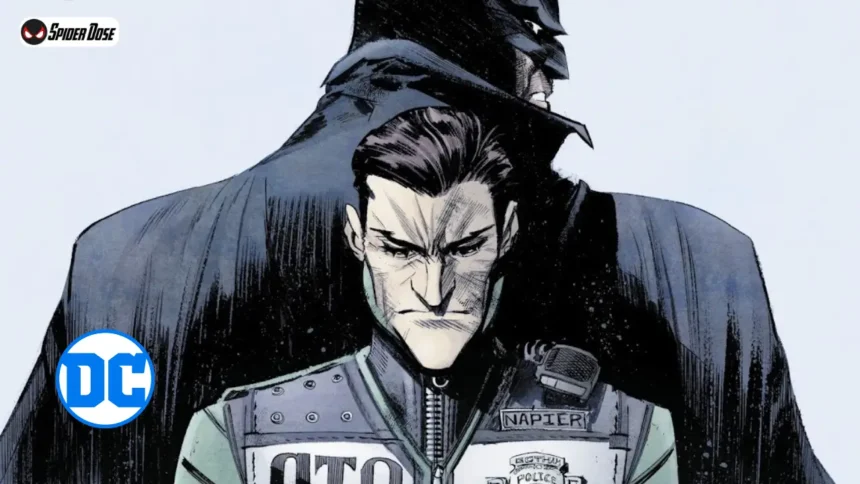
Gotham has always been a city built on extremes, but Batman White Knight pushes that contrast further than most DC stories dare to go. Instead of asking whether Batman is a hero, this narrative questions what happens when his methods finally face public scrutiny. I remember reading this storyline for the first time and realizing it wasn’t just another alternate-universe tale — it was a sharp critique of power, justice, and control.
Rather than glorifying the Dark Knight’s crusade, the story reframes Gotham through the eyes of its citizens, politicians, and even its villains. This version of the Caped Crusader feels less like a symbol of hope and more like a destabilizing force. That perspective shift is what makes the White Knight concept so compelling and unsettling at the same time.
Batman White Knight Reimagines Gotham’s Moral Balance
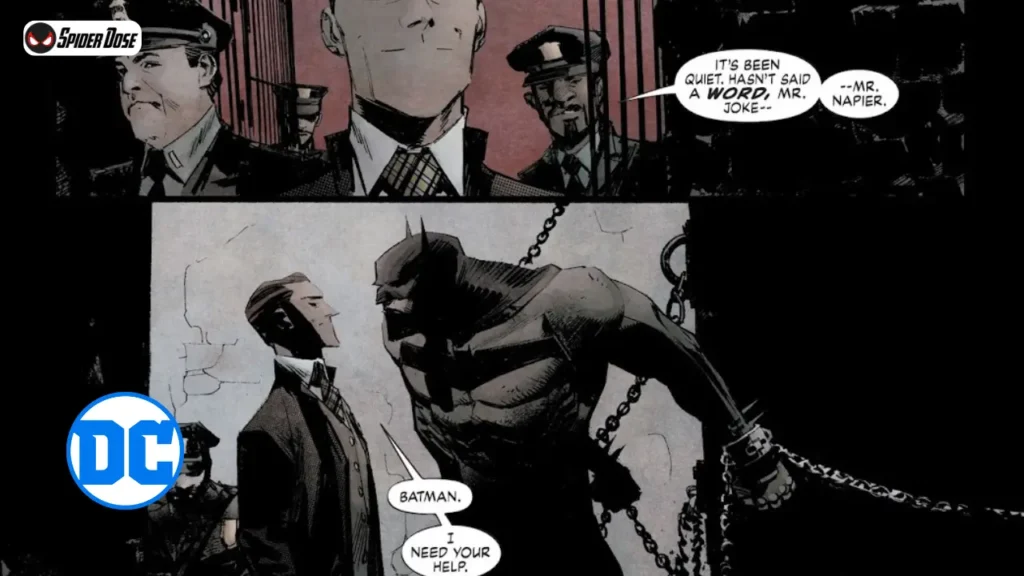
One of the most striking elements of this storyline is how it flips Gotham’s moral structure. In this world, Jack Napier — no longer the Joker — becomes the voice of reform, while Batman’s violent methods are openly questioned. Seeing Gotham officials side with a former villain feels wrong at first, but that discomfort is intentional.

The narrative forces us to confront an uncomfortable idea: what if Batman’s war on crime causes as much damage as it prevents? Police budgets skyrocket, public infrastructure collapses, and Gotham becomes dependent on chaos as a form of order. This interpretation of the Dark Knight strips away the myth and exposes the consequences beneath the mask.
By challenging the traditional heroic framework, the story makes readers rethink what justice actually looks like in a broken city.
The Role of Bruce Wayne in the Batman White Knight Universe
Bruce Wayne in this universe is still driven by trauma, but his obsession feels more dangerous than noble. I found it fascinating how the story portrays him less as a savior and more as a man who cannot let go of control. His refusal to adapt becomes his greatest weakness.
Unlike classic portrayals where Bruce is always one step ahead, here he’s reactive, defensive, and often outmaneuvered. Gotham no longer blindly accepts his presence, and that rejection hits harder than any physical blow. The tension between Bruce Wayne and Batman is more pronounced than ever.

This internal conflict reinforces the idea that symbols, when left unchecked, can become prisons — even for the people who created them.
Why Joker Becomes the “White Knight”
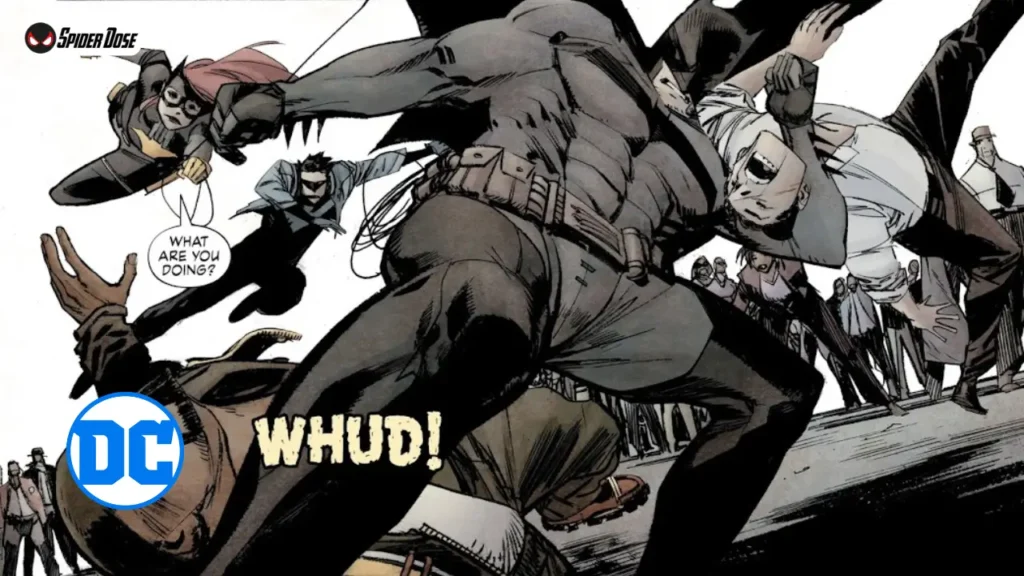
The transformation of Joker into Jack Napier is not redemption in the traditional sense. Instead, it’s a calculated exposure of Gotham’s hypocrisy. Napier uses logic, charisma, and political strategy to dismantle Batman’s legacy piece by piece.
What makes this arc so effective is that Napier isn’t portrayed as purely good. His methods are manipulative, his intentions questionable, and his past impossible to erase. Yet, he speaks truths no one else dares to say. That ambiguity is the heart of Batman White Knight.
Watching Gotham rally behind a reformed villain says more about the city’s desperation than about Napier himself.
Harley Quinn’s Most Grounded Interpretation
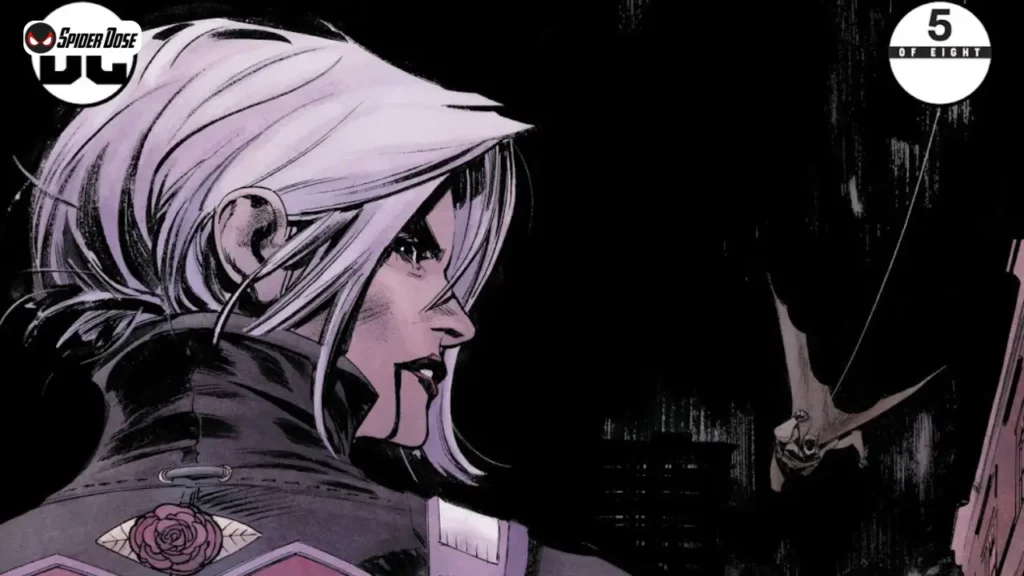
This storyline delivers one of the most mature portrayals of Harley Quinn in DC Comics. Here, she’s no longer defined by obsession or comic relief. Instead, she becomes the emotional anchor of the narrative.
Harley understands both versions of Joker — the monster and the man — better than anyone else. Her clarity highlights how distorted Batman’s worldview has become. I appreciated how her character evolves without relying on shock value or exaggerated violence.


She represents emotional accountability in a world dominated by unchecked symbols.
Art Style and World-Building Set the Tone
Sean Murphy’s art is inseparable from the story’s impact. Gotham feels oppressive, political, and alive. The exaggerated architecture and sharp lines visually reinforce the emotional tension between order and chaos.
Every panel feels intentional, especially in how Batman is framed — often looming, intrusive, or isolated. The visuals subtly tell the reader when Gotham no longer belongs to him.
This artistic direction makes the story feel grounded, almost realistic, despite its alternate-universe setting.
Why Batman White Knight Resonates With Modern Audiences
What makes this story endure is its relevance. It questions authority, vigilantism, and the cost of blind trust in powerful figures. In a world increasingly skeptical of institutions, this version of Batman feels uncomfortably plausible.
Rather than offering easy answers, the narrative invites reflection. Is fear an acceptable tool for justice? Can symbols outgrow their purpose? These questions linger long after the final page.
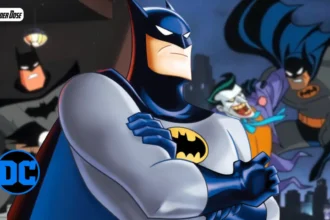
For fans who grew up watching batman cartoon shows, this storyline feels like a mature evolution — one that respects the past while daring to challenge it.
Final Thoughts
Batman White Knight isn’t about replacing the Dark Knight — it’s about holding him accountable. By stripping away the myth and exposing the consequences of his crusade, this story delivers one of the most intelligent and provocative Batman interpretations ever written.
It proves that Gotham doesn’t just need saving — it needs understanding.